


“Should I Use a Car Cover in the Garage?”: Indoor Car Storage Tips
By John Funk, September 16, 2026

Quick Answer
Yes, a car cover can offer extra protection for a vehicle kept in the garage, especially for extended periods. A clean and properly fitted soft indoor car cover helps protect your vehicle from dust, dirt, airborne debris, accidental scratches, and other minor damage that can occur even in an enclosed garage. For the best protection, clean and dry the vehicle thoroughly before putting on a soft cover designed for indoor use.
Key Takeaways
- Covering your vehicle can help provide extra protection while it remains in the garage for extended storage.
- A soft indoor car cover helps protect against dust, dirt, debris, accidental scratches, and other minor damage.
- Ensure the vehicle is clean and fully dry before applying the cover.
- A properly fitted cover is generally a better choice than a loose-fitting universal cover.
- For long-term storage, prepare the vehicle by cleaning it, checking fluids, protecting the battery, and taking steps to prevent tire flat spots.
When leaving your car in the garage for long-term storage, experts recommend keeping it under wraps for added protection. This may get you thinking: Why should I use a car cover in the garage? Wouldn’t that be a little over the top? Let’s try to answer this question and settle this issue once and for all.
Why Use a Car Cover in Your Garage?
You need the added protection of a soft indoor car cover when storing your precious ride for extended periods, like when you’re going on a lengthy vacation or are being deployed for military service. Likewise, people who drive convertibles and classic cars put their vehicles in long-term storage during the winter. After all, who would drive such a car in that kind of weather?
It’s true that keeping your car in a garage, personal storage unit, or warehouse for long-term storage will provide a certain level of protection, but if you want to be twice as sure that your vehicle will remain free from dust, dirt, debris, and small critters, you need to cover it up with a high-quality Seal-Fit car cover. By choosing not to skimp on this very essential item, you also protect your car, whether it’s an Audi, a Camaro, a Corvette, or something else against accidental scratches, dents, dings, and paint damage.
What Are the Benefits of Using a Car Cover Indoors?
Even when stored indoors, a vehicle can benefit from the added protection of a properly fitted car cover.
- Blocks dust and dirt: Helps keep dust, dirt, and debris from settling on the vehicle.
- Reduces scratches: Creates a protective barrier against accidental contact and minor surface scratches.
- Helps prevent minor dings: Offers some protection from light impacts caused by items stored or moved around the garage.
- Protects the paint: Helps shield the exterior finish from dust and other contaminants that can accumulate over time.
- Supports long-term storage: Provides a protective barrier when the vehicle is left parked and unused for long periods.
Can a Car Cover Damage Your Car?
A car cover can potentially cause paint scratches if dirt, dust, or debris gets trapped between the cover and the vehicle’s surface. As the cover shifts from wind, movement, or handling, these particles can rub against the paint and create fine scratches or swirl marks.
To reduce this risk, always clean and dry the vehicle before covering it, and use a clean cover with a soft inner lining.
Seal Skin Expert Tip: Always clean and dry your vehicle before putting on a cover. Trapped dirt can rub against the paint when the cover moves, while moisture can create problems during extended storage.
What Type of Car Cover Should I Use in a Garage?
A good indoor car cover should protect the vehicle without trapping moisture or allowing the cover itself to contribute to surface damage. Look for these characteristics:
- Breathable material: Allows air and moisture to escape, helping reduce condensation buildup under the car storage cover.
- Soft interior: A fleece or similarly soft inner lining helps minimize the risk of scratches and scuffs against the paint.
- Durable material: Choose a lightweight but durable fabric that can protect against dust, dirt, and everyday garage exposure.
- Proper fit: A cover designed to fit the vehicle closely stays in place better and reduces unnecessary movement against the paint.
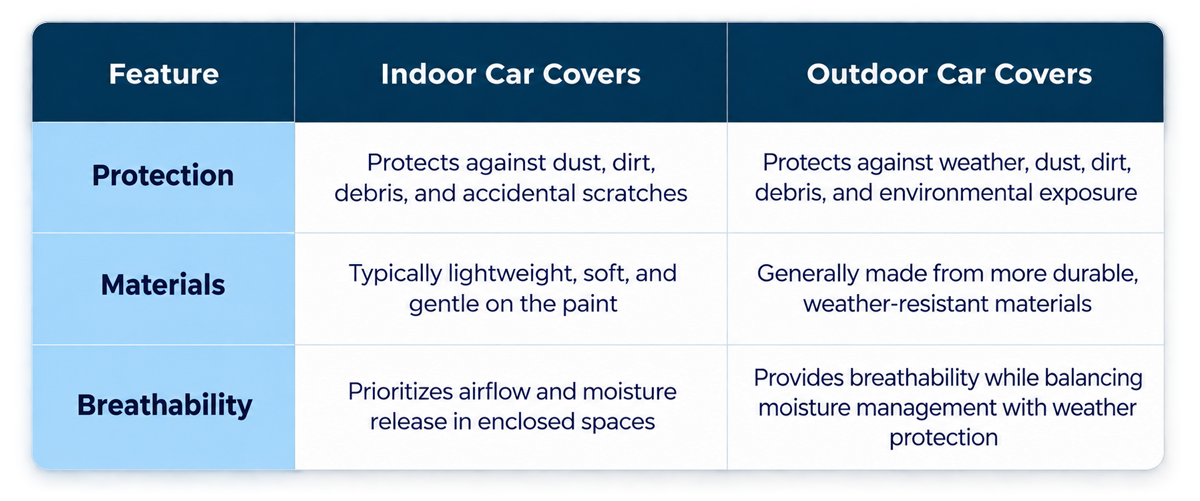
Indoor vs. Outdoor Car Covers: What's the Difference?
Indoor and outdoor car covers are designed for different storage environments, so their materials and protective features vary.

How Should I Cover My Car in the Garage?
Proper preparation helps keep the area beneath the cover clean and dry, reducing the risk of scratches to the paint. Follow these steps:
- Clean the vehicle: Clean the vehicle’s exterior thoroughly to keep debris from becoming trapped under the cover.
- Dry it completely: Make sure the exterior is fully dry to help prevent moisture from becoming trapped underneath the cover.
- Use a clean cover: A dirty cover can transfer grit and debris onto the paint, so clean the cover regularly and before use when needed.
- Ensure a proper fit: Choose a portable car cover that fits the vehicle correctly and stays securely in place without excessive movement.
- Inspect periodically: Check the vehicle and cover from time to time to catch moisture, dirt buildup, or other issues early.
Seal Skin Expert Tip: Check the cover and vehicle periodically during long-term storage. This helps you spot moisture, dirt buildup, or other issues before they become bigger problems.
Choosing a Car Cover for Long-Term Storage: 5 Things to Look For
You might think that any cover will do, since you’ll be keeping your vehicle in a safe, enclosed space anyway, right? Unfortunately, that is not always the case. Next to your home, your car is probably your most valuable possession, so give it the attention and protection it deserves. As a general rule, you need to use a high-quality car cover when storing it for extended periods – even if you intend to store it indoors.
How do you choose a cover that suits your needs? Consider these tips.
- Choose a lightweight indoor car cover. Since you’re parking your vehicle in a comparatively safe area and will need a cover primarily to ward off dust, condensation, and other minor damages, a cover made from lightweight materials will suffice. A soft, indoor car cover is also easier to fold and store when you no longer need it.
- Go for a Seal-Fit. Universal fit covers are the most affordable, but they are most likely made from thinner materials (which offer minimal protection) and tend to be too big or too small for your car. On the other hand, custom-fit covers offer the best fit, but they come with a hefty price tag. Go for the sweet spot by choosing a Seal-Fit car cover. This way, you’ll get the best balance between fit, quality, and price.
- Pick one with multiple layers of protection. The best car covers have a tough outer layer capable of blocking harmful elements, like the sun’s UV rays, acid rain, bird droppings, tree sap, and dust, and a protective, water-resistant middle layer. More importantly, they have a soft inner layer (preferably soft fleece lining) that prevents any external pressure from leaving scratches that may ruin your car’s exterior finish.
- Make sure it’s durable. No one wants a cover that needs constant replacement, so choose one made with superior workmanship. For best results, pick one that is double-stitched and has ultrasonically welded seams.
- Choose one that offers a warranty. Don’t let your investment go to waste. Get the most from your hard-earned money by buying a cover that comes with a multi-year warranty. Only a few manufacturers offer such an extensive warranty, so do your research before making a purchase.
Indoor Car Storage Tips: What to Do Before Putting Your Car in Long-Term Storage
After answering one of the most common questions car owners ask when storing their vehicle for the long term, here are some other tips that you may want to keep in mind before hitting the hibernate mode.
- Clean it inside and out. Give your car a thorough washing to remove all traces of dirt, dust, grime, and other pollutants. A good waxing provides an extra layer of protection to the exterior finish. The interior should be immaculately clean as well, so make sure there is no food or any perishable items left inside.
- Mind your fluids. Protect your engine by checking your oil fluid level and make sure it is full. Better yet, have an oil change before storing your car, since the contaminants present in used oil can cause significant engine damage, especially when left alone for a long time. Consider filling up the gas tank (or at least have a quarter tank of fuel) as well to prevent condensation from getting in and prevent seals from drying out. Add a fuel stabilizer to ensure even better results.
- Disconnect the battery. Leaving your battery unattended for extended periods can completely deplete the charge. Worse, it can damage your battery enough to warrant a replacement. Avoid this by disconnecting the negative battery cable. However, if you’re not keen on disconnecting the battery every time you put your car in storage, install a trickle charger to keep it charged and ready to go when you take it out of the storage.
- Protect your tires. To prevent permanent flat spots, remove the tires and put your car on jack stands or blocks. If the idea doesn’t appeal to you and you prefer to leave them on, consider inflating your tires to the correct pressure.
Long-Term Storage? Keep Your Car Protected with Seal Skin Covers
Seal Skin manufactures 100% waterproof yet extremely breathable Seal-Fit car covers at a great price. For those looking for the best car covers for indoors, choosing a breathable, properly fitted cover can help keep dust and debris off the vehicle during storage. We’re extremely confident that you'll be satisfied with our products (we guarantee that they are of extremely high quality and virtually free from any defects!) so we’re offering a full 30-day return and exchange warranty with every purchase, at no additional cost.
If you want to ask some questions about our products, exchange, and refund policies before making a purchase, please feel free to call us at 800-915-0038 during our office hours (Monday to Friday from 9:00 AM to 5:00 PM EST). We will help you find the right cover for your car, so give us a call today!
FAQs
Is a car cover necessary for a garage-stored vehicle?
For vehicles that spend long periods parked in the garage, a car cover can help maintain a cleaner exterior and reduce exposure to common sources of minor damage.
Will a car cover keep my car completely dust-free in the garage?
A car cover cannot keep out every bit of dust, but a properly fitted cover can help minimize the dust and debris that settle on the vehicle.
What happens if I put a cover on a dusty or dirty car?
Dirt and debris trapped between the cover and the paint can rub against the surface as the cover moves, potentially causing fine scratches.
Will a car cover trap moisture inside?
A breathable cover allows moisture to escape and can help reduce condensation buildup. Ensure the vehicle is free of dirt and fully dry before placing the cover over it.
Should I buy a custom-fit or universal car cover?
A properly fitted cover is generally preferable because it stays in place better and reduces excess movement against the vehicle.
Can I leave my car covered for several weeks or months?
Yes. A suitable indoor car cover can be used for extended storage, provided the vehicle and cover remain clean and dry and are inspected periodically.
Can I use the same car cover indoors and outdoors?
It depends on the cover. Outdoor covers are designed to withstand weather exposure, while indoor covers typically prioritize softness and breathability. Check the manufacturer's intended use.
How do I clean and maintain my car cover?
Follow the manufacturer's cleaning instructions. Maintain a clean, dry cover by removing dust and debris regularly and allowing it to dry fully before reuse.
What should I look for when buying an indoor car cover?
When choosing an indoor car cover, prioritize breathability, durability, a soft inner lining, and a proper fit for better protection against dust and surface damage.
What are the best indoor car covers for classic cars?
The best indoor car covers for classic cars are breathable, soft, and properly fitted to the vehicle. These features help protect the paint from dust, debris, and minor scratches during garage storage.
Is a car cover for winter storage necessary?
A car cover for winter storage can help protect your vehicle from dust, dirt, debris, and accidental scratches while it remains parked for an extended period. For indoor storage, choose a breathable cover with a soft inner lining and a proper fit.
What is the best indoor car cover for dust?
The best indoor car cover for dust is one made from breathable, soft material that fits the vehicle properly. It should help keep dust and debris off the paint without trapping moisture or causing scratches.