

How to Protect Your Car From Hail: Effective Ways to Prevent Hail Damage
By John Funk, September 28, 2026

Quick Answer
A garage or enclosed parking structure provides the best protection against hail damage. When covered parking is not available, a purpose-built hail protection car cover can add an extra layer of protection against hail impacts. Checking weather alerts ahead of a storm gives you time to find shelter or cover your vehicle before conditions worsen.
The right protection method depends on your parking situation, the time available before the storm, and the options you have on hand. Some options provide reliable physical shelter, while others are best used as temporary or emergency measures.
Key Takeaways
- A garage or enclosed parking area provides the strongest protection from direct hail impacts.
- Covered parking and carports can provide useful shelter, although they may not protect every part of the vehicle.
- A purpose-built hail protection car cover can add impact protection when a vehicle must remain outdoors.
- Weather alerts can provide valuable time to move or protect your vehicle before a hailstorm arrives.
- Avoid parking under trees during severe weather because falling branches can create additional vehicle damage.
- Comprehensive auto insurance may cover hail damage, depending on the policy and deductible.
Why Does Hail Damage Cars?
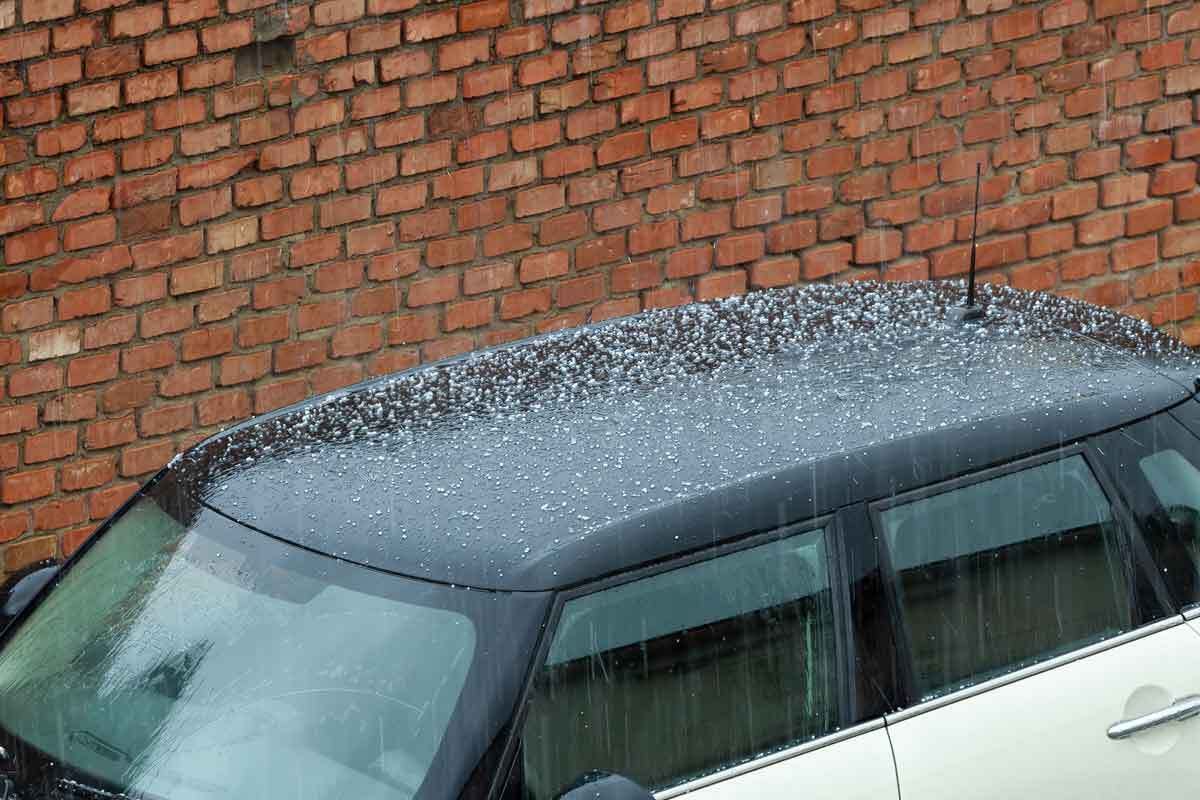
Hail damage can vary depending on hailstone size, impact speed, wind conditions, and which parts of the vehicle take the impact.
Large or fast-moving hailstones can dent exposed body panels, including the hood, roof, trunk, and other horizontal surfaces. Wind can also change the direction of the hail, exposing areas that might otherwise receive less direct impact.
Glass components can be especially vulnerable. A strong impact may damage the windshield or car windows, while mirrors and lights can also be affected during severe weather. Paint may also sustain chips, cracks, or other surface damage when impacts are strong enough.
Since vehicle components and body panels can respond differently to impacts, hail damage varies depending on the storm. The best approach is to reduce direct exposure whenever possible.
What Is the Best Way to Protect a Car From Hail?
The best hail protection for cars depends largely on whether you have access to covered parking. A garage provides the strongest protection because it physically separates the vehicle from the storm. If a garage is unavailable, covered parking or a purpose-built hail protection car cover may be the next best option.
Garage or Enclosed Parking
A garage or fully enclosed parking structure provides the most reliable protection from direct hail impact. The vehicle stays protected from hail, wind-blown debris, and other potential hazards during severe weather.
For vehicles parked at home, enclosed parking is generally the preferred option whenever severe weather is expected.
Covered Parking or a Carport
A carport or other covered structure can provide useful protection, particularly when a storm is approaching and a garage is not available. However, partially enclosed structures have limitations.
Wind can drive hail sideways, which means some parts of the vehicle may still be exposed. The level of protection depends on the structure's design, the storm's direction, and wind strength.
Hail Protection Car Cover
A hail protection car cover can be a practical option for vehicles that must remain outdoors. Unlike a standard car cover designed primarily for dust, sunlight, or general weather exposure, a purpose-built hail cover for car is designed to provide additional cushioning against impacts.
The cover should fit the vehicle properly and remain securely fastened during windy conditions. It can be particularly useful for vehicles parked in driveways, apartment parking areas, or other outdoor locations where covered parking is unavailable.
Seal Skin Expert Tip: Check the forecast before leaving your vehicle parked outdoors for an extended period. If hail is possible, having your hail protection car cover ready ahead of time gives you more time to protect the vehicle safely.
Hail Protection Methods Compared
Different protection methods offer different levels of protection. The comparison below outlines the strengths and limitations of each option.

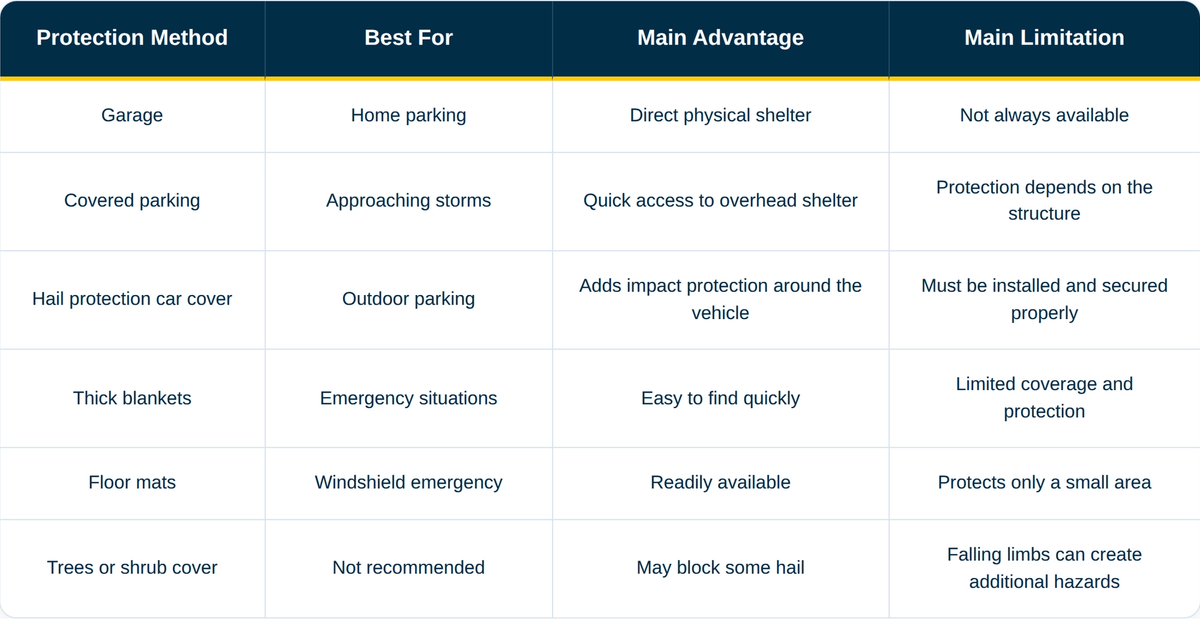
A garage remains the strongest option when available. A purpose-built hail protection car cover can be a more practical solution when the vehicle must remain outside, while blankets and floor mats are better treated as temporary emergency measures.
How to Protect Your Car From Hail Without a Garage

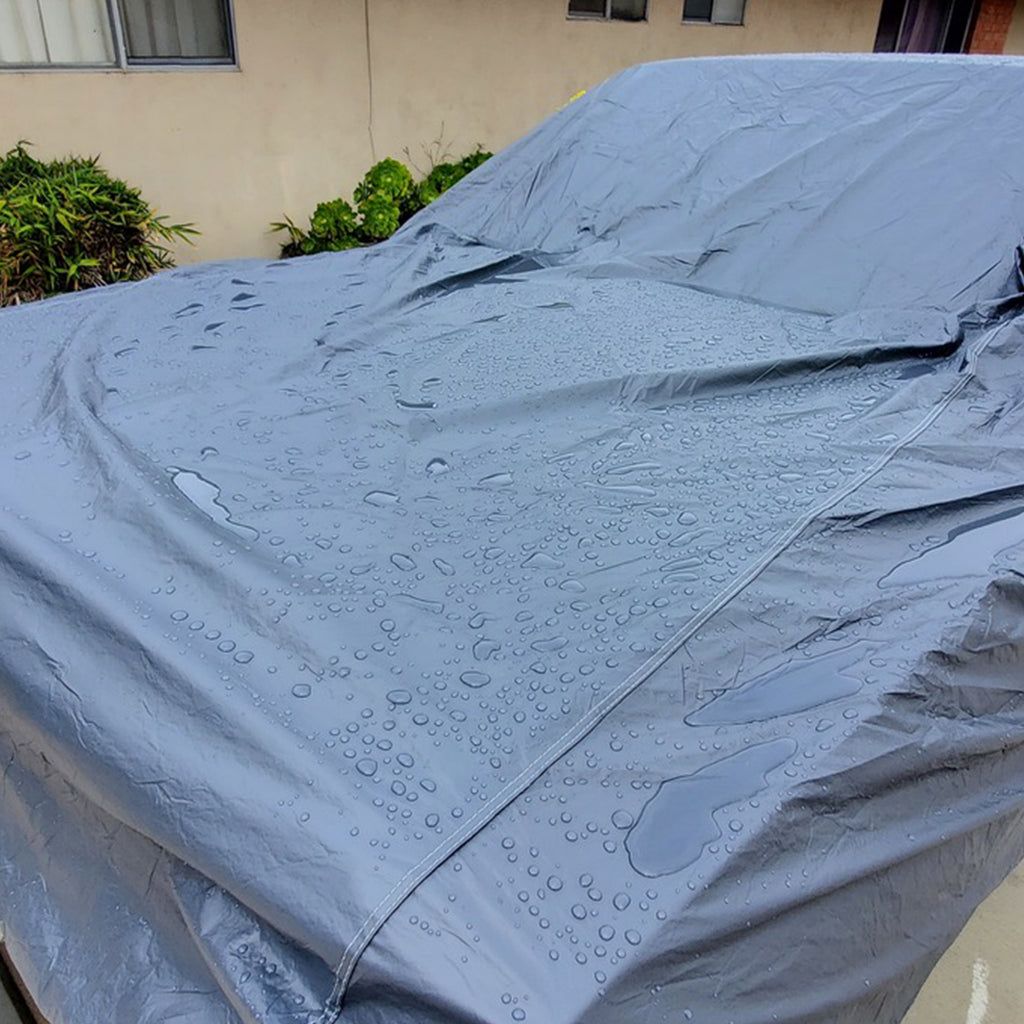
If a garage is not available, early preparation can make a difference. Keeping an eye on weather alerts gives you time to move your vehicle to shelter or install a protective cover before the hailstorm begins.
1. Find Covered Parking Before the Storm
When severe weather is expected, look for available covered parking before conditions worsen. Available options can vary depending on your location, including:
- Parking garages
- Covered structures
- Carports
- Commercial covered parking areas
The goal is to move the vehicle before the hailstorm arrives rather than waiting until conditions become dangerous.
2. Use a Hail Protection Car Cover
A hail protection car cover can provide an additional layer of protection when outdoor parking is unavoidable. When comparing options, look for features that support both impact protection and outdoor use.
Important factors include:
- Impact-absorbing construction
- A secure vehicle fit
- Straps, tie-downs, or other fastening systems
- Weather-resistant outer materials
- Breathable construction
- Ease of installation
- Suitability for outdoor use
A properly fitted and secured car cover is generally more practical than trying to place loose materials over a vehicle after a storm has already begun.
Seal Skin Expert Tip: A hail protection car cover works best when it is properly fitted and secured before severe weather arrives. Familiarize yourself with the installation and fastening process beforehand so you can secure the cover quickly when a storm is approaching.
3. Use Blankets as an Emergency Option
Thick blankets may provide some temporary cushioning when no other protection is available. However, they should be viewed as an emergency workaround rather than a replacement for a purpose-built hail protection product.
Blankets may shift in the wind, leave parts of the vehicle exposed, and provide inconsistent protection. Securing them can also be difficult when weather conditions are already deteriorating.
4. Protect the Windshield in an Emergency
If there is no time to fully protect the vehicle, protecting the windshield may help reduce exposure to one of the most vulnerable areas. Floor mats or other thick materials may provide limited temporary coverage when properly secured.
This approach protects only a small section of the vehicle and offers limited protection against hail.
5. Avoid Trees During Severe Weather
Parking beneath a tree might block some hail, but falling branches can pose a greater risk to your vehicle. Strong winds can cause branches or other debris to fall onto the vehicle.
For this reason, trees are generally not a dependable substitute for a garage, carport, or properly designed covered structure.
6. Monitor Severe Weather Alerts
Weather alerts give you time to make decisions before conditions become unsafe. When a hailstorm is forecast, consider where the vehicle is parked and what protection can realistically be put in place.
If covered parking is available, move the vehicle early. If the vehicle must remain outdoors, install a suitable cover before the storm reaches the area.
What to Do When a Hailstorm Hits While You're Driving
Personal safety should always take priority over protecting the vehicle. If hail begins while you are driving, focus on maintaining control and finding a safe location.
Reduce your speed as needed for the road conditions and maintain a safe following distance. If safe covered parking is available, such as a suitable parking structure or covered area, consider moving there.
Do not stop in an unsafe traffic location simply to avoid hail. It is also best to avoid stopping underneath trees, as falling branches may create an additional hazard.
After finding a safe location, wait until the conditions are safer before getting back on the road.
What Should You Look for in a Hail Protection Car Cover?
A hail protection car cover should provide more than standard vehicle coverage. Its construction and fit can affect how well it stays in place and how it handles outdoor conditions.
Impact-Absorbing Layers
The protective layers are intended to add cushioning between hail impacts and the vehicle's surface. The specific construction can vary between products, so it is important to review the manufacturer's specifications rather than assuming all covers offer the same level of impact protection.
Proper Vehicle Fit
A cover should fit securely around the vehicle. A loose cover may move excessively in strong wind, while a properly fitted cover is easier to secure and manage.
Vehicle-specific or semi-custom options may provide a closer fit than a universal cover, depending on the product.
Weather-Resistant Outer Material
Hail is only one of the risks associated with outdoor exposure. Rain, wind, sunlight, and changing weather conditions can all affect a cover while it is installed.
A weather-resistant outer material can help the cover handle temporary outdoor exposure during storm preparation.
Soft Inner Layer
The inside of the cover should be designed with the vehicle's painted surfaces in mind. A softer inner layer can help reduce direct abrasion from contact between the cover and the vehicle.
Breathability
Breathable construction can support moisture-vapor management. This is especially important when a vehicle is covered outdoors, where changing weather conditions can create moisture around the vehicle.
Secure Fastening
Straps, buckles, tie-downs, or other fastening systems can help keep the cover in place during windy weather. Even a well-designed cover may provide less effective protection if it shifts or becomes partially displaced during a storm.
Regular Car Cover vs. Hail Protection Car Cover
A regular car cover and a hail protection car cover serve different purposes.
A standard car cover may be designed to help protect against dust, sunlight, dirt, rain, or general outdoor exposure. A purpose-built hail protection cover is designed with additional impact cushioning in mind.
The differences can include:
- Weather protection: Both types may offer protection from outdoor conditions, depending on their construction.
- UV protection: Many standard outdoor covers are designed to help reduce exposure to sunlight.
- Dust protection: Standard car covers are commonly used to keep dust and debris off a parked vehicle.
- Impact cushioning: Hail protection covers are designed to provide more cushioning against impacts than a typical weather or dust cover.
- Construction: Hail covers may use specialized layered materials intended to absorb or distribute some impact.
- Intended use: A standard cover is generally focused on everyday storage protection, while a hail cover is intended for storm-related impact protection.
- Protection level: How well a product protects a vehicle depends on the cover itself and the severity of the hail.
No car cover can guarantee that a vehicle will receive zero hail damage in every storm. A hail protection cover should instead be viewed as a product designed to help reduce the impact of hail when covered parking is unavailable.
Does Car Insurance Cover Hail Damage?
Hail damage may be covered, but only if you carry comprehensive coverage. Comprehensive, sometimes called other-than-collision coverage, is the part of a policy that pays for damage from events outside your control, including hail. Liability coverage, which most states require, does not cover hail damage to your own vehicle.
Comprehensive is optional, so confirm your policy includes it and check your deductible before assuming you are covered. If hail strikes, photograph the damage from several angles, then contact your insurer to decide whether a claim makes sense given your deductible and the repair estimate.
Understanding the different types of auto insurance coverage can help clarify the protection available for hail damage.
Since policies and state rules vary, always confirm the details with your own insurer or agent.
What Should You Do After a Hailstorm?
Once conditions are safe, take a careful and systematic approach when inspecting your vehicle for storm damage.
Step 1: Inspect the Vehicle
Look over the roof, hood, trunk, doors, and other exposed body panels. Inspect the vehicle for dents, dings, paint damage, and other visible impact marks.
Step 2: Photograph the Damage
Take clear photographs of any visible damage. Capture multiple angles where necessary so that the condition of the affected areas is easy to document.
Step 3: Check Glass, Lights, and Body Panels
Inspect the windshield and other windows for cracks or chips. Also check mirrors, lights, and other exterior components that may have been struck.
Step 4: Contact the Insurer if Appropriate
If the damage appears significant and you have applicable coverage, contact the insurer to understand the next steps in the claims process.
Step 5: Get a Professional Repair Assessment
A professional inspection can help identify damage that may not be immediately obvious and provide a clearer understanding of available repair options.
Step 6: Understand Your Repair Options
The extent and nature of the damage can determine which repair option is needed. A qualified repair professional can explain which approach is appropriate for the affected panels or components.
Why Choose Seal Skin's Hail Protection Car Covers?

When it comes to hail protection, construction and fit are key considerations. Seal Skin's hail protection comes from its flagship Supreme cover, built for extreme weather, hail risk, and high-value or long-stored vehicles.
Supreme is built on SEAL-TEC, Seal Skin's patent-pending fabric system that pairs performance-grade Oxford polyester with a basket-type weave. The heavy-duty fabric is designed to help reduce the severity of hail impacts, a soft fleece lining protects the paint, and ultrasonically welded seams reinforce the leak points. It is waterproof and breathable, sized to your vehicle's make, model, and year for a vehicle-matched fit, and held in place with an elastic hem, reinforced grommets, and secure straps. Supreme is backed by a non-prorated limited lifetime warranty.
Every cover also ships with a lock and cable kit and a storage bag, and Supreme adds an antenna patch kit. The covers are designed to drape over the mirrors without mirror pockets, which tend to be the first part of a cover to wear out.
Seal Skin has shipped more than one million covers over 15-plus years, with ongoing product testing and quality oversight behind each tier.
Real-World Storm Preparation
For many outdoor vehicle owners, the most important part of hail preparation is having protection ready before severe weather arrives. Waiting until hail is already falling can make it difficult or unsafe to install a cover or move the vehicle.
Seal Skin customer Tony D'Agostino shared a similar experience after putting a Seal Skin cover on his new Challenger before a hailstorm. He reported that his Challenger remained undamaged after the storm, despite hail reaching what he described as golf-ball size. This example shows why monitoring weather alerts and having a hail protection car cover ready before a storm can make preparation more manageable when a garage is not available.
Be Ready for the Next Hailstorm
Parking a car inside a garage or enclosed parking structure provides the strongest protection from hail. When that is not possible, planning ahead becomes important.
Monitor severe weather alerts, identify nearby covered parking, and consider keeping a suitable hail protection car cover ready for outdoor use. The right preparation can give you more options before a hailstorm arrives and help reduce unnecessary exposure to direct impacts.
At Seal Skin, we offer some of the best car covers on the market and you can choose one based on your budget and needs. You can call us at 800-915-0038 during our office hours (Monday to Sunday, 9 AM to Midnight EST) and we will help you find the right car cover that fits your needs and budget. We will also help you if you have any questions about our products, shipping policies, and exchange/refund policies.
Frequently Asked Questions
How can you protect your car from hail?
Parking the vehicle in a garage or enclosed structure provides the strongest protection. If that is not available, covered parking or a purpose-built hail protection car cover can help reduce direct exposure.
How to protect your car from hail without a garage
Look for covered parking before the storm arrives. If the vehicle must remain outdoors, use a properly fitted and secured hail protection car cover designed to provide additional impact cushioning.
How should you protect your car against hail damage?
Reduce the vehicle's exposure to direct hail by using a garage, covered structure, or appropriate hail protection cover.
Staying updated on weather alerts gives you time to protect your vehicle before the storm arrives.
What can help protect my car from hail damage?
Complete prevention cannot always be guaranteed during severe weather, but covered parking provides the strongest protection. When outdoor parking is unavoidable, a hail protection cover may help reduce the impact of hail.
How to protect your windshield from hail
For the strongest protection, move the vehicle into a garage or enclosed structure. In an emergency, thick materials may provide limited temporary coverage for the windshield, but they do not protect the rest of the vehicle.
How do I protect car windows from hail?
Covered parking provides the most reliable protection for vehicle glass.
A properly designed hail protection car cover may also provide coverage over the windows when outdoor parking is unavoidable.
Does a car cover protect against hail?
A standard car cover may not provide significant impact cushioning. A purpose-built hail protection car cover is designed to help reduce the impact of hail, although no cover can guarantee protection from every type of hailstorm.
What is the best car cover for hail protection?
The best option is one designed specifically for hail protection and appropriate for your vehicle. Look for:
- Impact-absorbing construction
- A secure fit
- Weather-resistant materials
- A soft inner layer
- Breathability
- Reliable fastening