

How to Protect Your Car From Bird Poop: Prevention, Cleaning & Car Covers
By John Funk, September 24, 2026

Quick Answer
Bird droppings can stain or etch car paint when left on the surface, especially in hot conditions. To protect your car, park away from common bird perches, clean droppings gently as soon as practical, and use a properly fitted car cover when the vehicle is regularly parked outdoors.
Key Takeaways
- Bird droppings can damage automotive finishes when they remain on the surface, particularly under hot conditions.
- You can lower the chances of bird poop landing on your car by avoiding parking directly beneath trees, overhead wires, poles, and ledges.
- Fresh bird droppings should be removed promptly using an automotive-safe cleaning method rather than being aggressively scrubbed or scraped.
- A properly fitted cover helps keep bird droppings, dust, dirt, UV exposure, and other outdoor contaminants from coming into direct contact with the vehicle’s exterior.
- A car cover can be especially useful when a vehicle is regularly parked outdoors or left unused for extended periods.
Bird droppings are more than an unpleasant mess on an otherwise clean vehicle. When left on automotive paint, they can contribute to staining and etching, especially when the vehicle is exposed to heat and the residue remains on the surface. Knowing how to prevent bird droppings, clean them safely, and protect the vehicle outdoors can help keep the paint finish looking its best.
Prompt removal is important because bird droppings can damage automotive paint. Gentle cleaning methods and nonabrasive materials can help remove bird droppings without unnecessarily damaging the vehicle’s exterior.
Does Bird Poop Damage Car Paint?
Yes, bird poop can damage car paint when it remains on the surface. The risk depends on factors such as the composition of the droppings, exposure time, heat, and the condition of the vehicle's finish.
Why Bird Droppings Can Damage Automotive Paint
Bird droppings contain acidic components that can affect automotive finishes. According to Ford, the uric acid in bird droppings can damage paint if left on the surface, and the company tests its coatings using artificial droppings formulated to replicate the differing acidity of birds across a region.
The clear coat is the outermost protective layer of a modern automotive paint system. Once contaminants affect this layer, the underlying paint finish can become more vulnerable to visible damage.
This is why bird poop paint protection is mainly about limiting how long the contaminant remains on the vehicle. Prompt cleaning reduces the amount of time the droppings are in contact with the finish.
Why Heat Can Make the Problem Worse
Sunlight can raise the surface temperature of a vehicle considerably. Heat can increase the effect of contaminants on automotive finishes, making it particularly important to deal with bird droppings on a car that has been sitting in direct sunlight.
There is no universal time limit for when damage will occur. The condition of the paint, environmental conditions, the composition of the droppings, and the length of exposure can all vary.
Fresh vs. Dried Bird Droppings
Fresh droppings are generally easier to remove because they have not had as much time to dry onto the surface. Dried residue can be more difficult to remove and should not be scraped off with a hard object.
Instead, soften the material first. This reduces the need for force and helps minimize the risk of scratching or otherwise damaging the finish.
Seal Skin Expert Tip: Keep a clean microfiber towel and automotive-safe cleaning product in the vehicle if bird droppings are a recurring problem. Having the right supplies ready makes it easier to clean the affected area promptly.
What Damage Can Look Like
If bird droppings remain on the paint, the affected area may show:
- Staining or discoloration
- Etching or an impression in the finish
- Reduced gloss
- Localized clear-coat damage
- A visible mark that remains after the surface has been cleaned
Bird droppings can etch into the clear coat, so they should be cleaned promptly using a soft, non-abrasive material rather than scrubbing aggressively.
How to Safely Remove Bird Poop From Your Car
Don't scrape dried bird droppings from the paint. Soften the residue first, then gently remove it with an automotive-safe cleaning method and a clean, non-abrasive microfiber towel.
Step 1: Get the Car Out of Direct Sunlight
If possible, move the vehicle into a shaded area before cleaning. Lower surface temperatures make the cleaning process more manageable and reduce continued heat exposure while the contaminant is sitting on the paint.
Step 2: Soften the Bird Droppings
Apply water or an appropriate automotive-safe detailing product to the affected area. The goal is to loosen the residue instead of trying to remove it by force.
For dried material, give the liquid enough time to soften the residue before attempting to wipe it away.
Step 3: Let the Product Dwell
Let the water or cleaning product remain on the affected area briefly, following the product’s instructions.
This gives the product time to loosen the contaminant and reduces the amount of friction needed during cleaning.
Step 4: Gently Wipe It Away
Use a clean microfiber towel and light pressure. Avoid dry rubbing, scrubbing, or repeatedly dragging a towel across the surface while the residue is still hard.
If the material does not come away easily, soften it again rather than increasing the pressure.
Step 5: Wash the Area
After removing the bird droppings, wash the area thoroughly to clear away any remaining residue and cleaning product. Dry the surface with a clean towel.
Step 6: Inspect for Etching
Inspect the area once it has been cleaned and fully dried. If a stain, dull spot, or visible outline remains, the contaminant may have affected the finish rather than simply leaving surface residue.
Minor surface marks may sometimes be addressed through appropriate detailing, while deeper clear-coat damage may require professional paint correction or repair.
What Not to Do
When figuring out how to safely remove bird poop from a car, avoid:
- Scraping dried residue with hard objects
- Dry rubbing the affected area
- Using abrasive materials
- Applying excessive pressure
- Trying to remove hardened residue immediately
Gentle cleaning matters because friction between residue, dirt, and the paint can create additional surface damage. A soft, non-abrasive cloth and gentle rubbing can help remove contaminants from vehicle paint without causing unnecessary surface abrasion.
How Can I Keep Birds From Pooping on My Car?
You cannot completely control where birds fly or perch, but you can reduce the likelihood of repeated droppings by changing the vehicle's environment.
Avoid Parking Under Trees
Trees can provide convenient perches, particularly when branches extend directly over a parking space. If birds regularly use a tree, droppings can fall directly onto vehicles parked underneath it.
Look for signs of repeated bird activity before choosing a parking spot. These can include:
- Droppings on the pavement
- Birds repeatedly sitting on nearby branches
- Nests in the surrounding trees
- Several vehicles with similar contamination
- Heavy bird activity around the area
Trees can also expose a vehicle to other contaminants such as sap, leaves, pollen, and small pieces of debris.
Seal Skin Expert Tip: Look beyond the parking spot itself and check what is directly above the vehicle. Trees, roof edges, signs, and other elevated structures can become common perches for birds.
Avoid Power Lines and Other Overhead Perches
Power lines are another common place where birds may sit above parked vehicles. Light poles, building ledges, signs, and other elevated structures can create similar problems.
If birds regularly gather above a parking space, moving a short distance can be one of the simplest ways to prevent bird droppings on a car.
Identify a High-Bird-Activity Parking Spot
Look around the parking area before leaving your vehicle unattended for a few hours. Existing droppings can provide a useful indication that birds frequently use the area.
Also look for:
- Birds repeatedly using the same wire or branch
- Nearby nests
- Groups of birds around surrounding structures
- Multiple vehicles with fresh droppings
- Trees or structures directly above the parking space
Changing the parking location is often easier and more predictable than trying to change bird behavior.
How to Keep Birds Away From Your Car
Parking location and bird deterrence are related, but they are not the same thing. Changing where the vehicle is parked reduces exposure, while deterrents attempt to reduce bird activity around the vehicle.
Change the Parking Environment
Moving the vehicle away from a regular bird perch may be the most practical solution. A different parking space can eliminate direct exposure without requiring any changes to the surrounding area.
Remove Nearby Attractants Where Practical
If food waste, accessible garbage, or another obvious attractant is drawing birds into the immediate area, addressing it may help reduce bird activity.
However, food is not the cause of every bird-dropping problem. Birds may simply be using a convenient branch, wire, roofline, or other elevated location.
Use Bird Deterrents With Realistic Expectations
Visual deterrents and other products designed to discourage birds can be considered where appropriate. For example, reflective bird deterrent tape can create movement and reflected light that may discourage birds from landing nearby. Bird scare balloons are another option designed to make an area less appealing to birds. Their effectiveness can vary by bird species, location, and surrounding conditions.
Birds may also become accustomed to a deterrent over time, so a product that changes bird behavior in one location may not produce the same result everywhere.
The distinction is important: Bird deterrents attempt to change bird behavior. A car cover protects the vehicle regardless of whether the deterrent works.
Does a Car Cover Protect Against Bird Droppings?
A properly fitted car cover creates a physical barrier between your vehicle's exterior and bird droppings. It can also reduce the vehicle’s exposure to sunlight, dust, dirt, falling debris, and other outdoor elements.
A cover does not guarantee that the vehicle will remain completely free from contamination. Its effectiveness depends on proper fit, secure fastening, appropriate use, and regular maintenance.
When choosing a car cover for bird droppings, consider:
- Physical coverage: The cover should provide broad coverage across the vehicle's exterior.
- Outdoor durability: Materials should suit the conditions where the vehicle is parked.
- Breathability: Outdoor covers should allow moisture vapor to escape and help manage condensation.
- Interior material: A soft interior can help reduce contact-related surface damage when the cover is used correctly on a clean vehicle.
- Secure fastening: Straps, elastic hems, and reinforced attachment points can help keep the cover in position.
- Proper fit: A vehicle-specific fit can provide more complete coverage and reduce unnecessary movement.
- Maintenance: Proper storage starts with a clean, dry cover, so follow the recommended cleaning and storage practices after each use.
A car cover to protect from bird droppings can therefore be useful when the vehicle spends substantial time outdoors, particularly in an area with frequent bird activity.
Is a Car Cover Worth It for a Car That Sits Outside?
A car cover can make sense for vehicles that regularly remain outdoors, particularly when covered parking is unavailable. It can also provide protection from several outdoor contaminants at the same time instead of addressing bird droppings alone.
A Car Cover Makes More Sense When:
- The vehicle is regularly parked outside
- Covered parking is not available
- Birds repeatedly target the same parking area
- The vehicle sits unused for extended periods
- The owner wants protection from multiple outdoor contaminants
A Car Cover May Be Less Convenient When:
- The vehicle is driven several times per day
- Covered parking is already available
- The vehicle is frequently wet or dirty before covering
- Installing and removing a cover would be impractical
A cover is most useful when its installation and removal fit naturally into the owner's parking routine. For a vehicle that sits outside for long periods, the physical barrier can address bird droppings while also helping limit exposure to sun, dust, dirt, and other environmental contaminants.
Protection Method Comparison

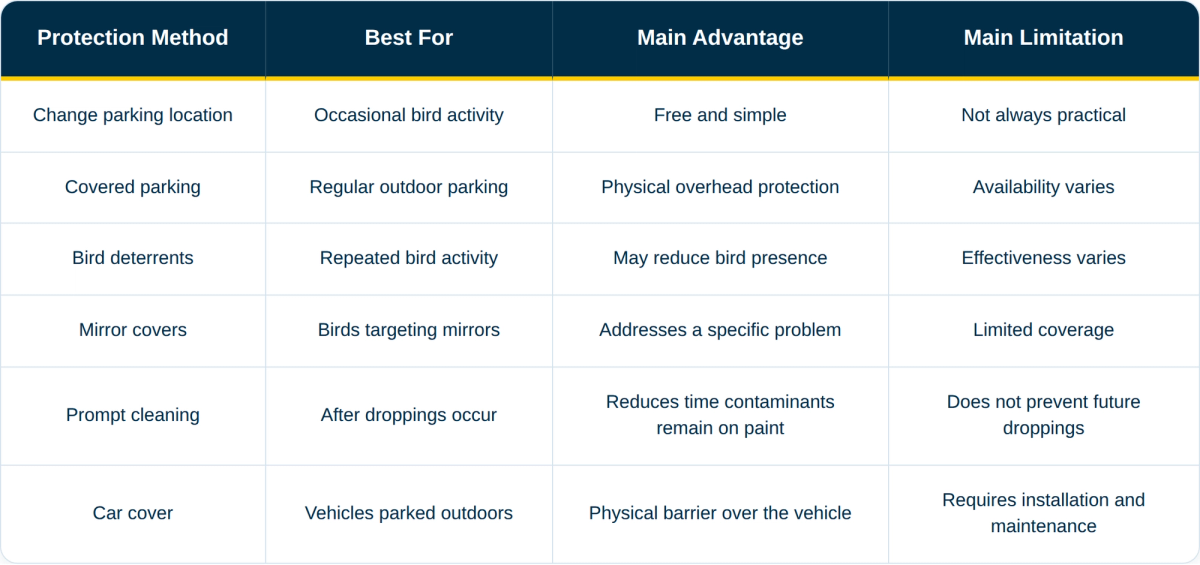
Use deterrents to influence bird behavior. Use a car cover when you want physical protection for the vehicle itself.
Why Choose Seal Skin Car Covers for Protection From Bird Droppings?


Not every car cover offers the same level of outdoor protection. When choosing a car cover for bird droppings, consider fit, durability, breathability, interior protection, secure fastening, and ease of use. Seal Skin offers different cover options designed for various outdoor and indoor storage needs.
- Vehicle-Specific Fit: A properly fitted cover provides more complete coverage and helps keep the cover securely in place. Seal Skin uses vehicle-specific sizing for a snug fit.
- Outdoor-Durable Construction: Seal Skin offers covers with different levels of weather protection, including options designed for regular outdoor use.
- Breathability and Moisture Management: Breathable construction allows moisture vapor to escape while helping protect the vehicle from outdoor moisture.
- Soft Interior: The layer that touches your paint matters. Seal Skin's Supreme and Elite covers use a soft fleece lining, while the 5-Layer and ProGuard use a soft cotton interior, both meant to reduce contact-related surface marks when the cover is used on a clean, dry vehicle.
- Secure Fastening: Seal Skin covers use an elastic hem, reinforced grommets, and secure straps to help keep the cover from shifting in wind. Each cover includes a lock and cable kit for added security.
- Easy Everyday Use: A cover should be practical to install, remove, and store, especially when the vehicle is regularly parked outside.
- Choose the Right Cover: Consider the vehicle, parking conditions, weather exposure, and frequency of use when selecting a Seal Skin cover.
Choose the Right Cover for Your Use Case
The right cover depends on how and where the vehicle is stored. A car mainly exposed to bird droppings, tree sap, dust, foliage, and pollen may have different requirements from one exposed to heavy rain, snow, hail, and year-round outdoor weather.
Seal Skin offers several protection levels. Its current range includes Supreme for heavy-duty outdoor protection, Elite for year-round outdoor use, 5-Layer for moderate climates and mixed indoor/outdoor parking, and ProGuard for primarily indoor storage and milder conditions.
For bird-dropping protection specifically, the important consideration is whether the selected cover matches the vehicle, parking environment, weather exposure, and frequency of use.
How to Maintain Your Car Cover
A car cover also needs proper care. Regular maintenance helps keep the cover clean and makes it easier to use without transferring dirt back onto the vehicle.
Follow the manufacturer's care instructions for cleaning the specific cover material. In general:
- Clean the cover based on the care instructions provided by the manufacturer.
- Allow it to dry as recommended before storage or reuse.
- Avoid covering a heavily dirty vehicle when loose grit could become trapped between the fabric and paint.
- Inspect straps, elastic hems, and fastening components for signs of wear.
- Store the cover properly when it is not being used.
Seal Skin recommends allowing its covers to dry fully before folding and storing them and advises following the care instructions for the specific material.
Keeping both the vehicle and cover reasonably clean is important. A car cover should protect the finish, not create another source of surface friction through trapped dirt and debris.
At Seal Skin, every car cover is sized to your specific vehicle and comes in four protection tiers, with a non-prorated warranty that runs up to a lifetime on our Supreme cover. The right choice depends on your parking situation and budget.
You can call us at 800-915-0038 during our office hours (Monday to Sunday, 9 AM to Midnight EST) and we will help you find the right car cover (best car cover for bird droppings) that fits your needs and budget. We will also help you if you have any questions about our products, shipping policies, and exchange/refund policies.
Frequently Asked Questions
Does bird poop damage car paint?
Yes. Bird droppings contain acidic components that can affect automotive finishes when they remain on the surface. Heat and prolonged exposure can increase the risk of staining or etching, so prompt and gentle cleaning is recommended.
How quickly should I remove bird poop from my car?
Bird droppings should be cleaned off promptly whenever possible rather than left on the vehicle for an extended time.
There is no universal damage timeline because conditions such as heat, exposure, paint condition, and the droppings themselves can vary.
How can I keep birds from pooping on my car?
Start by changing the parking environment. Avoid spaces directly beneath trees, power lines, building ledges, and other locations where birds regularly perch, and consider using a properly fitted car cover when the vehicle will remain outdoors.
What is the safest way to remove dried bird poop from car paint?
Do not scrape dried residue directly from the paint. Wet the affected area and give the residue time to loosen before carefully removing it with a soft microfiber towel that will not scratch the paint.
How do I keep birds off my car mirrors?
If birds repeatedly land on the mirrors, changing the parking location may help. Mirror covers or other temporary deterrents can also address this specific problem, but their usefulness depends on the situation and they do not provide outdoor car protection for the rest of the vehicle.
Does a car cover protect against bird droppings?
Yes, a properly fitted car cover creates a physical barrier that helps keep bird droppings and other outdoor contaminants off the vehicle's exterior. It cannot provide complete outdoor car protection in every situation, so proper fit, secure fastening, and regular care are important.
What should I look for in a car cover for outdoor protection?
Look for a cover that matches the vehicle properly and suits the local weather and parking conditions.
Important features can include outdoor-durable construction, breathability, a soft interior, secure fastening, and a design that is practical to install and maintain. Seal Skin's current range offers different construction and protection levels for different storage conditions.
What is a bird poop protector for car?
A car bird poop protector can include a properly fitted car cover that creates a barrier between bird droppings and the vehicle’s paint. Parking away from common bird perches can also help reduce exposure.
How to protect car paint from bird droppings?
Remove bird droppings as soon as reasonably possible using water or a car-safe cleaning product and a soft, nonabrasive microfiber towel.
A properly fitted car cover can also help limit direct contact with the paint.