




How to Measure Outdoor Sectional Furniture for the Perfect-Fit Cover (and Others, Too)
By John Funk, May 27, 2026

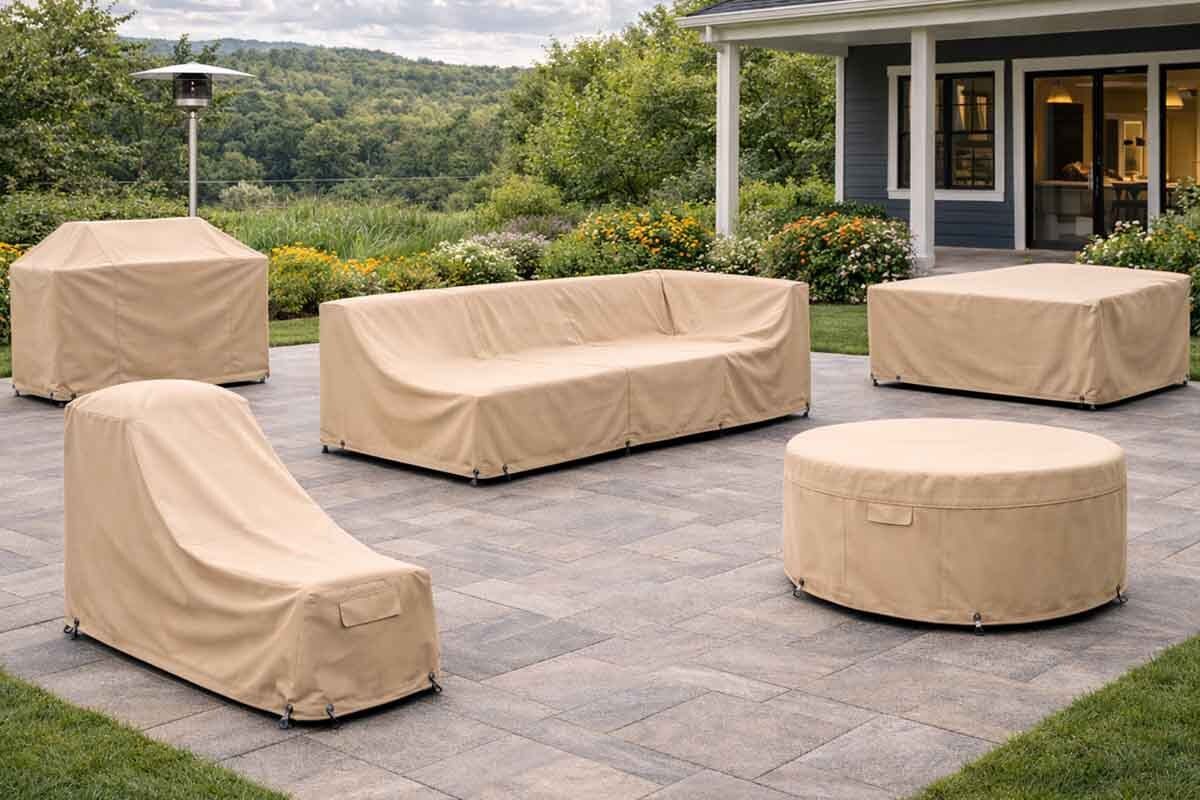
Skipping measurements before purchasing an outdoor sectional cover often leads to a poor fit, much the same as getting custom blinds made without knowing your exact window size, where accuracy is essential and guesswork rarely pays off. A cover that's too loose flaps in the wind and lets moisture pool underneath. One that's too tight won't go on properly and leaves edges exposed.
Achieving the correct fit is fairly simple, but it calls for a few minutes of precise measurement before making a purchase.
Here’s an easy-to-follow guide for measuring outdoor sectional furniture for a cover, along with useful tips that work just as well for other patio furniture pieces.
Why Accurate Measurements Actually Matter
A well-fitting sectional furniture cover does more than look tidy. It seals out rain, blocks UV rays that fade upholstery, keeps debris and bird droppings off cushions, and protects frames from moisture that leads to rust or rot over time.
A waterproof sectional cover that fits properly doesn't shift with wind gusts or let water collect in sagging fabric. Standing water often leads to mildew forming on both the cover and the furniture beneath it, undermining the very reason for using a cover in the first place.
Custom outdoor sectional covers offer a much closer fit than universal options, but they're only as good as the measurements provided.
Getting those numbers right from the start is what separates a cover that genuinely protects from one that looks adequate but underperforms.
Should You Measure a Sectional as One Piece or Separately?
Many people ask this, and the answer varies based on how the sectional is typically used.
If the sectional stays assembled in one configuration year-round, measure it as a single unit. This gives the most accurate footprint for a large sectional cover and usually results in better overall coverage.
If pieces are regularly rearranged, moved indoors for winter, or used independently, measure each section separately. Individual sectional patio furniture covers give more flexibility and are easier to manage when pieces move around.
For most outdoor setups where the sectional is a permanent fixture on a patio or deck, measuring the whole assembled unit is the more practical route.
How to Measure Outdoor Sectional Furniture
Before starting, have a measuring tape ready. A flexible fabric or metal tape both work. Measure in inches for the most precision. This is the process:
- Measure the width: Stand at one end of the assembled sectional and measure from the outermost left edge to the outermost right edge. This is the total width. For an L-shaped sectional, measure each arm of the L separately rather than trying to capture both in a single measurement.
- Measure the depth: Depth is the front-to-back measurement. Record the depth by measuring from the front of the seat cushions back to the rear edge of the frame. If the sectional has a chaise section or an extended lounger, measure that portion independently. It has a different depth than the main seating area.
- Measure the height: Measure from the ground to the highest point of the piece, usually the top of the back cushions. If the sectional has sections at different heights, note the tallest measurement.
- Account for cushions: Always measure with the cushions in place. Cushions add several inches to height and sometimes to depth. A cover sized without cushions will be too tight once they're included.
Do You Need to Add Extra Space to the Measurements?
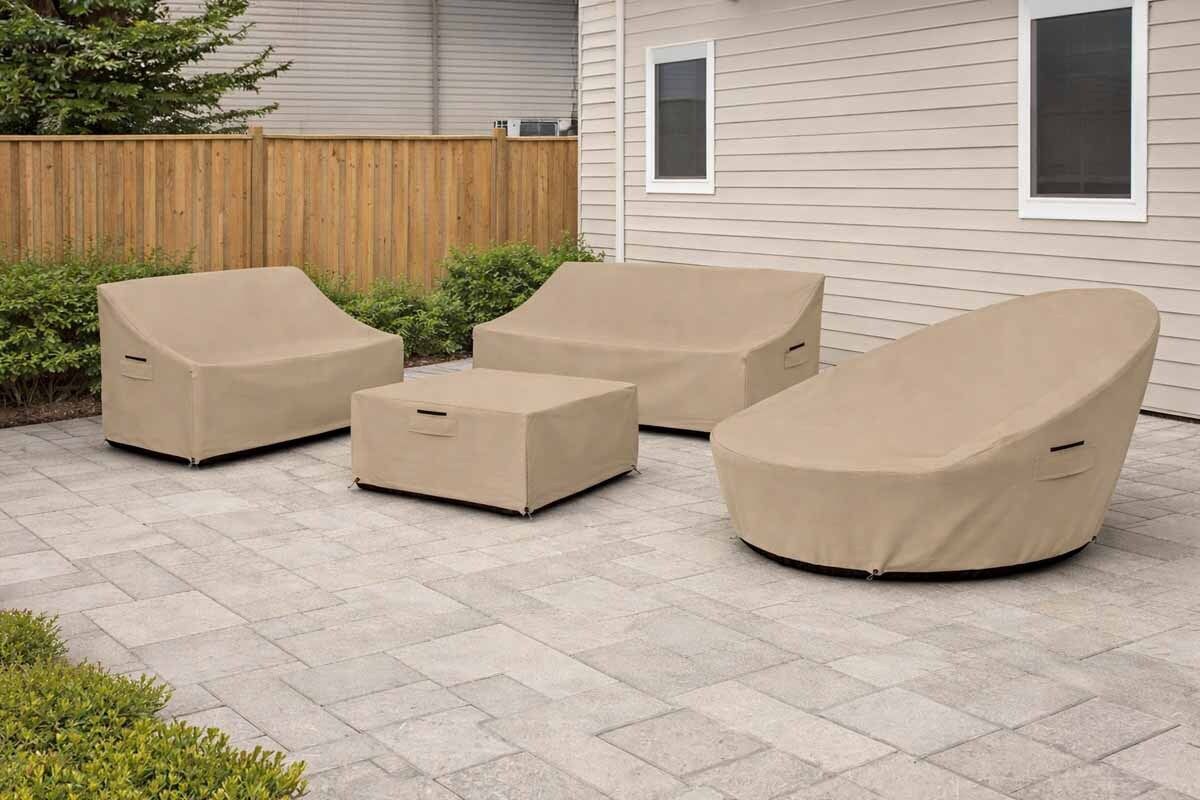
Yes, though the difference is usually smaller than people expect. A few inches of clearance in each direction is usually enough to ensure the cover goes on and comes off easily without being so loose that it catches wind.
Most cover manufacturers include a slight allowance for fit, but with custom sectional covers, you’re generally expected to provide precise measurements so the manufacturer can handle any necessary adjustments for proper fitting. When in doubt, the product sizing guide for the specific cover brand is the most reliable reference.
What you should avoid is choosing a cover that’s excessively large. An oversized sectional cover can shift in strong winds, collect water in sagging areas, and leave furniture edges more exposed, ultimately offering less protection than a properly fitted design.
Measuring L-Shaped Patio Furniture
L-shaped sectionals need slightly more attention than straight configurations. Here’s a simple way to handle them:
- Measure each leg of the L independently: one measurement for the long side, one for the shorter perpendicular section
- Note where the two sections meet, as this corner junction affects how a cover drapes and whether it requires a purpose-cut L-shape cover
- Record the overall bounding rectangle dimensions (the widest point of each axis). This is what most large sectional cover listings will ask for
- Don't forget that the corner piece itself adds to both measurements; it's not just the linear seating that counts
A cover designed specifically for an L-shaped sectional will fit far better than trying to adapt a rectangular cover. The fabric on a purpose-made L-shaped cover is cut to follow the contour, which prevents loose material bunching at the corner.
Custom-Fit vs. Universal Outdoor Sectional Covers
Universal covers are sized in broad categories — small, medium, large — and are designed to fit a range of furniture within those dimensions. They work adequately for standard shapes, but sectionals rarely fall neatly into standard dimensions. Arms vary, depths differ between brands, and L-shaped configurations add further complexity.
Custom outdoor sectional covers are cut to specific measurements. The fit is closer, the edges hang more cleanly, and the protection is more consistent across the entire piece. For an outdoor sectional that's being used regularly and exposed to weather year-round, a custom cover is a worthwhile upgrade over a universal option.
The trade-off is cost and lead time. Universal covers are cheaper and immediately available. Custom ones take longer and cost more. For most permanent outdoor setups, the custom route delivers better long-term value, especially when the sectional itself is a significant investment.
Don't Forget to Re-Measure After Any Changes
Sectionals shift over time. A new chaise gets added, the configuration changes for a party and never quite goes back, or a replacement piece has slightly different dimensions. Before ordering a replacement cover, re-measure rather than assuming the old measurements are still accurate. It takes five minutes and prevents a frustrating return.
Good patio sectional furniture covers keep your set clean, but more importantly, they're a genuine part of protecting that investment against weathering, UV damage, and general wear.
Taking the time to measure correctly is what separates a cover that fits and performs well from one that simply sits loosely over the furniture.
Why Choose Seal Skin Covers
After the measurements are taken, the next step is selecting a brand you can rely on for the task. Seal Skin Covers has built a strong reputation among homeowners and patio enthusiasts for good reason — the quality is consistent, and the covers are built to handle real weather, not just light drizzle.
A few things that set Seal Skin apart:
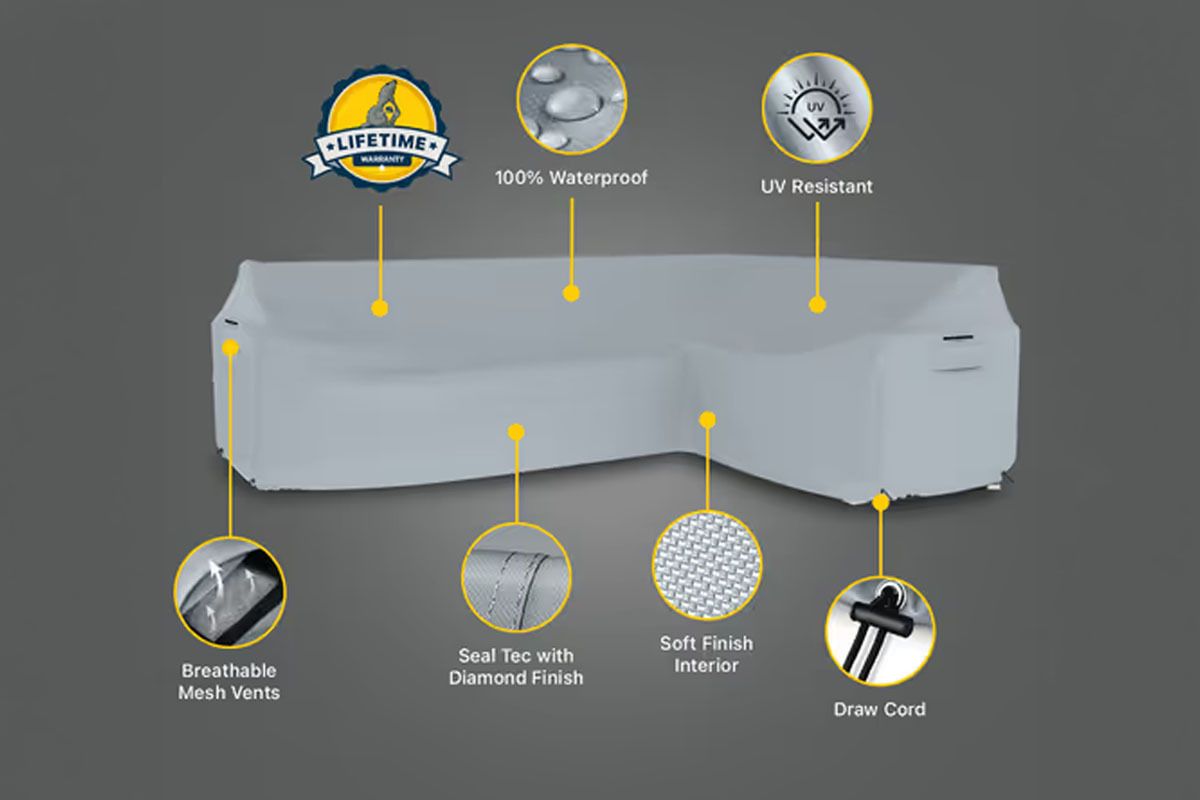
- Multi-layer waterproofing: Seal Skin covers use a heavy-duty, multi-layer fabric that keeps water from seeping through, even during extended rain. The waterproofing holds up over multiple seasons without cracking or peeling.
- UV protection built in: The outer layer is treated to resist UV degradation, which means the cover itself won't fade, weaken, or become brittle after a summer in direct sunlight, and the furniture underneath stays protected from the same rays.
- Breathable construction: Despite being waterproof on the outside, Seal Skin waterproof patio sectional covers allow air circulation underneath. This prevents moisture from being trapped against the furniture, which is what causes mildew and musty odors over time.
- Custom and standard sizing available: Whether the sectional is a simple three-piece or a large L-shaped configuration, Seal Skin offers sizing options that accommodate a wide range of patio setups without forcing a compromise fit.
- Secure fit features: Elastic hems, adjustable straps, and drawstring closures keep waterproof outdoor sectional covers in place during wind — a detail that cheaper covers often skip and one that makes a real difference in performance.
Our products are not just reasonably priced, but we will also ship your order right to your doorstep at no additional cost, without any delay. We offer a full 30-day money-back guarantee and a 10-year manufacturer’s warranty with every purchase.
You can call us at 800-915-0038 during our office hours (Monday to Friday from 9:00 AM to 5:00 PM EST), and we will help you find the right patio sectional cover that fits your needs and budget. We will also help you if you have any questions about our products, shipping policies, and exchange/refund policies.
Frequently Asked Questions
How do you measure outdoor sectional furniture for a cover?
To measure outdoor sectional furniture for a cover, take full dimensions with all cushions in place to ensure an accurate fit.
- Measure width (side to side)
- Measure depth (front to back)
- Measure height (floor to top of back cushions)
- Use a tape measure and record in inches
This ensures the cover fits properly and provides full protection.
Should you measure sectional furniture as one piece or separately?
If the sectional stays in one fixed configuration year-round, measure it as a single assembled unit for the most accurate fit.
If pieces are regularly moved or rearranged, measure each section individually so covers can be used flexibly.
Do you need to add extra space when measuring for a sectional furniture cover?
A few extra inches of clearance in each direction is generally enough to ensure the cover goes on and off easily. Avoid sizing up too much. An overly large cover catches wind, pools water, and leaves edges less protected.
How do you measure L-shaped patio furniture?
Measure each leg of the L independently — the length of the long side and the length of the shorter perpendicular section. Also record the overall bounding rectangle dimensions (the widest point of each axis), as most cover listings will ask for these numbers.
Are custom-fit outdoor furniture covers better than universal ones?
Custom-fit covers are cut to specific measurements, so the fit is closer, edges hang more cleanly, and protection is more consistent across the entire piece.
Universal covers work for standard shapes but often struggle with sectionals, especially L-shaped configurations, where dimensions vary significantly between brands.
How accurate do measurements need to be for outdoor sectional furniture covers?
Aim for highly accurate measurements, preferably with an error margin of no more than an inch. For custom covers, exact dimensions are essential since manufacturers use those numbers directly; even small errors can result in a cover that's too tight or leaves gaps at the edges.