



Custom Car Covers vs Universal Car Covers: Which One Should You Buy?
Both have clear advantages, but they are designed for different priorities. This car cover buying guide breaks down the real pros and cons of each option and explains what actually matters when protecting your vehicle.
Quick Answer A custom car cover is made for a specific make and model, giving you a precise fit but usually costing more and taking weeks to arrive. A universal car cover fits a wider range of vehicles and is cheaper and faster to get, but the loose fit can reduce protection. A semi-custom car cover matched to your vehicle's size offers a middle ground, combining a snug fit and weather protection without the cost or wait of a true custom cover.
Custom covers win on fit. Universal covers win on price and speed. A semi-custom cover matched to your vehicle's size offers a middle ground.
- Custom covers offer the best fit but cost more and often take weeks to make.
- Universal covers are affordable and readily available, but their loose fit can reduce protection.
- Fit and fabric are more important than whether a cover is simply labeled custom or universal.
- A semi-custom car cover matched to your vehicle's size can provide most of the fit benefits of a custom cover at a lower price.
- Look for waterproof and breathable fabric, a soft inner lining, and a clear warranty when choosing a cover.
Good protection should be easy to get without stretching your budget or spending weeks waiting for your car cover to arrive. So which should you buy: a custom car cover or a universal car cover?
Both have clear advantages, but they are designed for different priorities. Custom covers focus on precise fit, while universal covers focus on affordability and availability. A third option is a semi-custom car cover designed to closely match your vehicle's size and shape.
This car cover buying guide breaks down the real pros and cons of each option and explains what actually matters when protecting your vehicle.
What Is a Custom Car Cover?
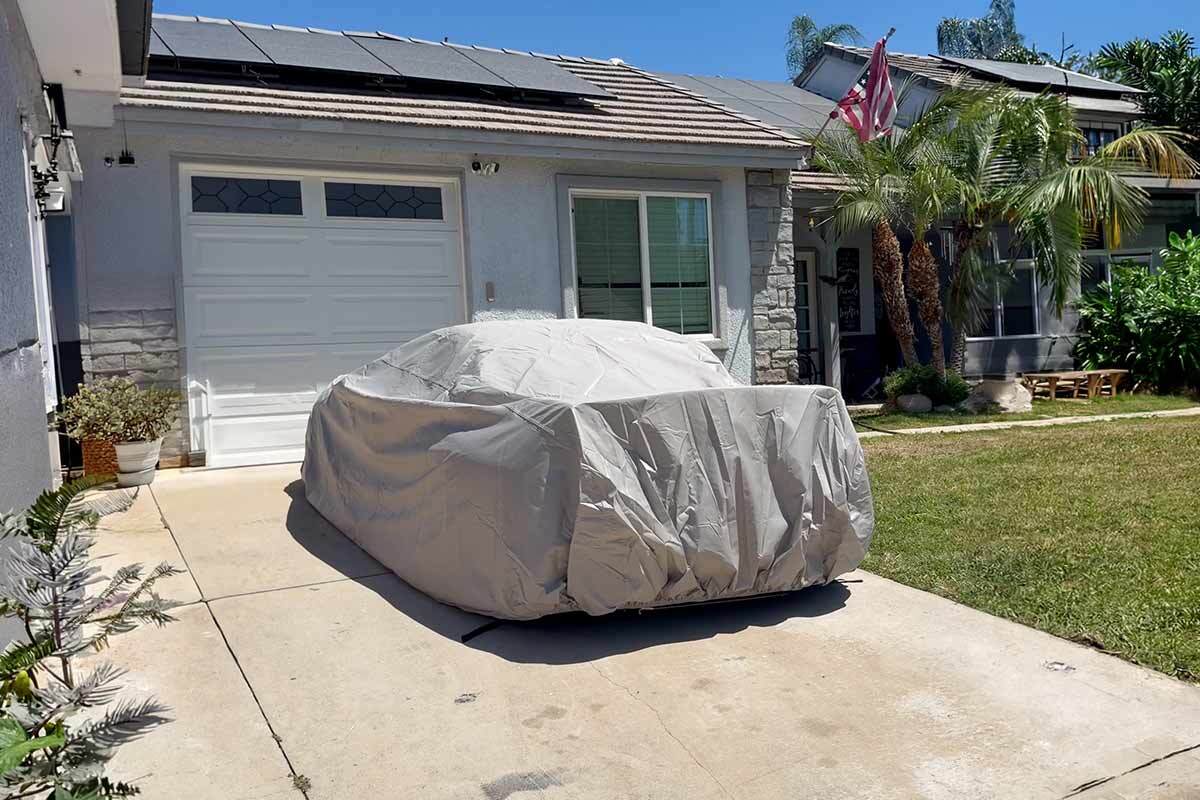
A custom car cover is cut from a pattern made for one specific make, model, and year. Instead of using a broad size category, the cover follows the contours of that particular vehicle. Many custom covers also include details such as sewn-in mirror pockets and an antenna slot.
Most custom covers are made to order. That means the cover may take several weeks to arrive, but the tradeoff is a much more precise fit.
A custom fit car cover can be a good choice for:
- Garaged vehicles that are covered for long periods
- Show cars where appearance and fit matter
- Owners who want the tightest possible fit
- Drivers who are comfortable paying more for a vehicle-specific cover
The biggest advantage is the fit. A properly fitted car cover has less loose material, which means less flapping in windy conditions. The downside is that the cover is tied to the specific vehicle it was made for. If the car is sold, the cover generally cannot be reused on a different model.
What Is a Universal Car Cover?
A universal car cover is designed around broad vehicle categories rather than one specific model. Sizes may be based on categories such as small sedan, midsize vehicle, SUV, or truck.
Since one cover needs to work across many different vehicles, the fit is loose by design. That makes universal covers simple to buy and easy to replace, but it also comes with some limitations.
The main appeal is convenience. Universal covers are generally inexpensive, available off the shelf, and can work when a vehicle needs basic coverage without a long wait. They can also be useful for people who own several vehicles or change cars frequently.
The loose fit is where universal covers can fall short. Extra material may flap in the wind and rub against the paint. Cheaper universal covers can also be thin and provide weaker protection against changing weather conditions. Some inexpensive covers may trap moisture, which can contribute to mold and musty odors.
That does not make every universal fit car cover a poor choice. It simply means the fit, fabric, and construction should be considered before buying.
Custom Car Cover vs Universal Car Cover: What Are the Pros and Cons?
The main difference between custom and universal car covers is how they balance fit, cost, and ease of use.
Custom Car Cover: Pros and Cons
Pros
- Precise fit tailored to the exact vehicle
- Mirror pockets and a contoured shape
- Snug appearance with less flapping in the wind
- Strong option for indoor and show cars
Cons
- Higher price
- Often made to order, with a wait of several weeks
- Designed for one specific vehicle
- Made-to-order covers can be harder to return or exchange
Universal Car Cover: Pros and Cons
Pros
- Lower price
- Usually ships immediately
- Flexible enough to fit several vehicles
Cons
- Loose, baggy fit can flap and rub against paint
- Often thinner, with weaker weather protection
- Low-cost versions may trap moisture
- May have a shorter lifespan
Custom vs Universal: Side-by-Side Car Cover Comparison
| Factor | Custom Cover | Universal Cover |
|---|---|---|
| Fit | Exact, molded to your model | Loose, one size fits many |
| Price | High | Low |
| Wait time | Weeks, often made to order | None, ships immediately |
| Weather protection | Strong, but varies by brand | Often weaker |
| Paint safety | Good | Flapping can increase scratch risk |
| Reuse on a new car | No, designed for one model | Yes |
| Typical warranty | Varies | Rare |
The simple takeaway is that custom covers win on fit, while universal covers win on price and speed. Neither option delivers the ideal combination of precise fit, low cost, and immediate availability.
Is There a Better Option Than Custom or Universal?
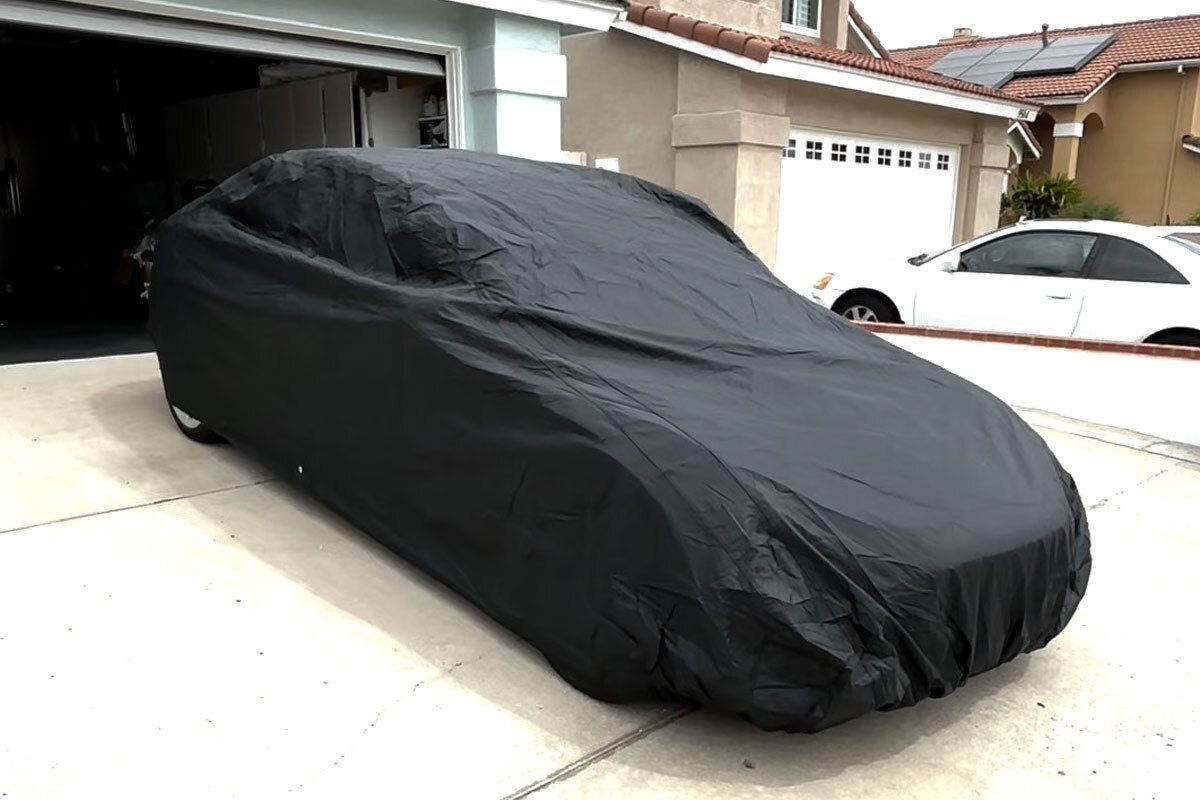
You can get a well-fitting car cover without paying a premium for a fully custom option. A cover matched to your vehicle's size can provide many of the benefits of a custom fit without the custom cost or wait.
A semi-custom car cover is sized to match the vehicle's overall length, width, and height, rather than being made from a unique pattern designed for one specific model. For example, Seal Skin uses the vehicle's dimensions to match the cover to the appropriate size, while an elastic hem helps pull the cover snug around the vehicle.
The distinction is worth noting because a semi-custom cover and a true custom cover are designed for different levels of fit. It is matched by size rather than made from a pattern designed specifically for one make and model.
"We started Seal Skin because 'good enough' covers were wrecking people's stuff, but totally custom-made covers were way too expensive. Our aim has always been to provide a well-fitting cover made with quality materials while keeping it affordable for customers."
How Seal Skin Compares to Custom and Universal
| Factor | Custom | Universal | Seal Skin |
|---|---|---|---|
| Fit | Exact | Loose | Matched to size with elastic hem |
| Price | High | Low | Mid-range, closer to universal |
| Wait time | Weeks | None | Ships fast |
| Weather protection | Strong | Weak | Waterproof and breathable, layered |
| Paint safety | Good | Scratch risk from flapping | Soft fleece inner lining |
| Reuse on a new car | No | Yes | Yes, by size |
| Warranty | Varies | Rare | Limited lifetime warranty |
For many owners, this middle-ground approach makes sense. It avoids the loose fit associated with many universal covers while also avoiding the price and multi-week production time associated with a true custom cover.
What Actually Makes a Car Cover Protect Your Car?
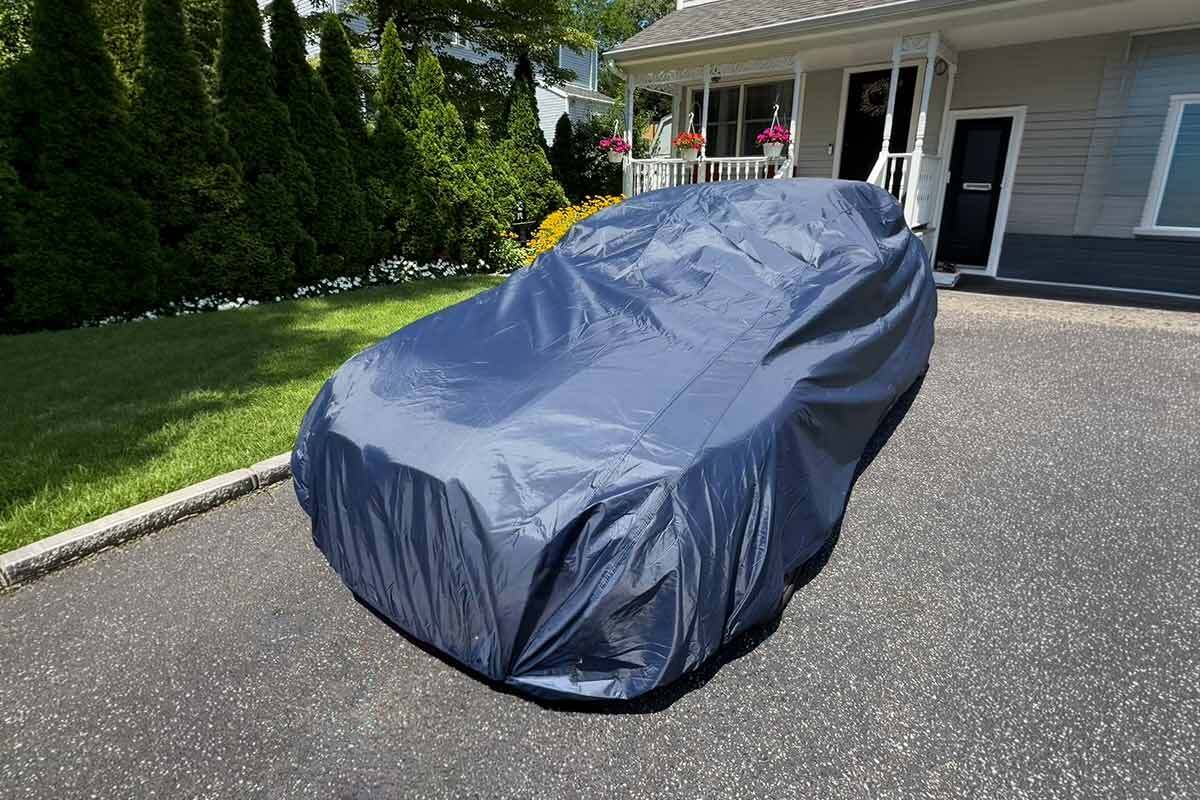
A car cover's protective performance depends on several factors, including the fabric, construction, lining, and overall fit.
Waterproof or Water-Resistant
A waterproof car cover is made to prevent rain and moisture from reaching the vehicle. This is especially important for vehicles that remain parked outdoors in heavy rain or snowy conditions.
Water resistance provides some protection, but outdoor vehicles may need stronger protection against prolonged exposure.
Breathable Fabric
A breathable car cover allows trapped moisture to escape instead of holding condensation against the vehicle. This can help reduce the chance of mold and musty odors.
The best outdoor car covers do not have to choose between being waterproof and breathable. A well-designed cover can keep outside water out while allowing moisture inside the cover to escape.
Layered Construction and a Soft Inner Lining
The outer material handles exposure to the weather, while the inner construction should help protect the vehicle's finish. A soft inner lining can reduce the risk of scuffs when the cover is placed on the vehicle.
A Snug Hem
Proper fit matters because loose fabric can flap in the wind and potentially rub against the vehicle's paint. A snug hem helps keep the cover in place and reduces flapping.
So, do car covers damage paint? A loose or gritty cover can scuff paint, especially when it repeatedly flaps in the wind. A properly fitted cover with a soft inner lining is designed to protect the finish instead.
Real-World Example: Protection From Hail
Weather protection matters most when a vehicle is left outside and exposed to sudden changes in conditions. Tim Tetaj says, "Most people don't think about a cover until they've already got hail dents or a faded hood."
Imagine leaving a new car parked outside when a sudden hailstorm rolls in. Seal Skin Covers features a customer story from Tony D'Agostino, who reported that his covered Challenger came through a storm with hail measuring up to golf-ball size without damage. While no car cover can guarantee protection from every hailstorm, the example shows why a properly fitted, weather-resistant cover can be valuable for vehicles parked outdoors.
A real-world experience like this highlights the value of choosing a cover designed for the conditions your vehicle regularly faces.
Which Car Cover Should You Buy?
The right car cover comes down to where the vehicle is stored, how frequently it is driven, and the budget available.
- Garaged show car you rarely move: A true custom cover may be worth the higher price for its precise fit and tailored appearance.
- Tight budget and occasional use: A universal cover can provide basic coverage, particularly for indoor parking.
- Daily driver parked outside: A semi-custom cover such as Seal Skin can be a practical choice if you want a closer fit and stronger weather protection without paying for a true custom cover.
"Our vision has always been to hit the sweet spot between fit, quality materials, and an affordable price."
Find the Right Balance of Fit, Protection, and Value
Protect the vehicle with a cover that fits properly, handles the weather, and matches the way the car is stored. Explore Seal Skin options to find a size-matched cover that offers a practical alternative to both expensive custom covers and loose universal covers.
Our products are not just reasonably priced, but we will also ship your order right to your doorstep at no additional cost, without any delay. We offer:
- A 10-year warranty
- A 30-day money-back guarantee
- Coverage for manufacturing defects
Find a size-matched cover that fits your needs and budget.
You can call us at 800-915-0038 during our office hours (Monday to Friday from 9:00 AM to 5:00 PM EST), and we will help you find the right car cover that fits your needs and budget. We will also help you if you have any questions about our products, shipping policies, and exchange/refund policies.
Frequently Asked Questions (FAQs)
How Are Custom and Universal Car Covers Different?
A custom car cover is cut from a pattern made for one specific make and model, so it provides a precise fit but usually costs more and is made to order.
A universal car cover is sized for broad vehicle categories, making it cheaper and faster to get but generally giving it a looser fit.
Are custom car covers worth it?
A custom car cover can be worth the cost if the vehicle is garaged or used as a show car and the tightest possible fit is important. For a daily driver parked outside, a semi-custom cover can provide much of the fit benefit at a lower cost.
Do universal car covers fit well?
Universal car covers are designed to fit many vehicles, so they generally have more slack than a custom fit car cover. That extra material can flap in the wind and rub against the paint, while a cover matched to the vehicle's size can provide a tighter fit.
Which Is Better for Your Car: Waterproof or Breathable Covers?
There's no need to settle for just one option. The best outdoor covers are both waterproof and breathable, keeping outside water out while allowing trapped moisture to escape. A cover that only focuses on blocking water can potentially trap condensation.
Do car covers scratch or damage paint?
A loose or gritty cover can scuff paint, particularly when it flaps against the vehicle in windy conditions.
A snug cover with a soft inner lining is designed to reduce this risk, so fit and lining are important considerations.
What is the best car cover for outdoor use?
For outdoor parking, look for a cover that is waterproof, breathable, properly matched to the vehicle's size, and lined to protect the paint. A semi-custom car cover such as Seal Skin is designed to combine these characteristics without the price and wait associated with a true custom cover.
How do I measure my car for the right cover size?
Measure the vehicle's total length from bumper to bumper and compare that measurement with the cover's size chart. For a semi-custom fit, length is a key measurement, and ordering based on actual dimensions is more reliable than choosing a size by vehicle model name.
Does Seal Skin make custom car covers?
Seal Skin offers a semi-custom fit matched to the vehicle's size rather than a one-off pattern made for a single model. This approach provides a snug fit and weather protection without the multi-week wait associated with many true custom covers.