



Center Console Boat Cover Guide: Fit, Materials, and Protection
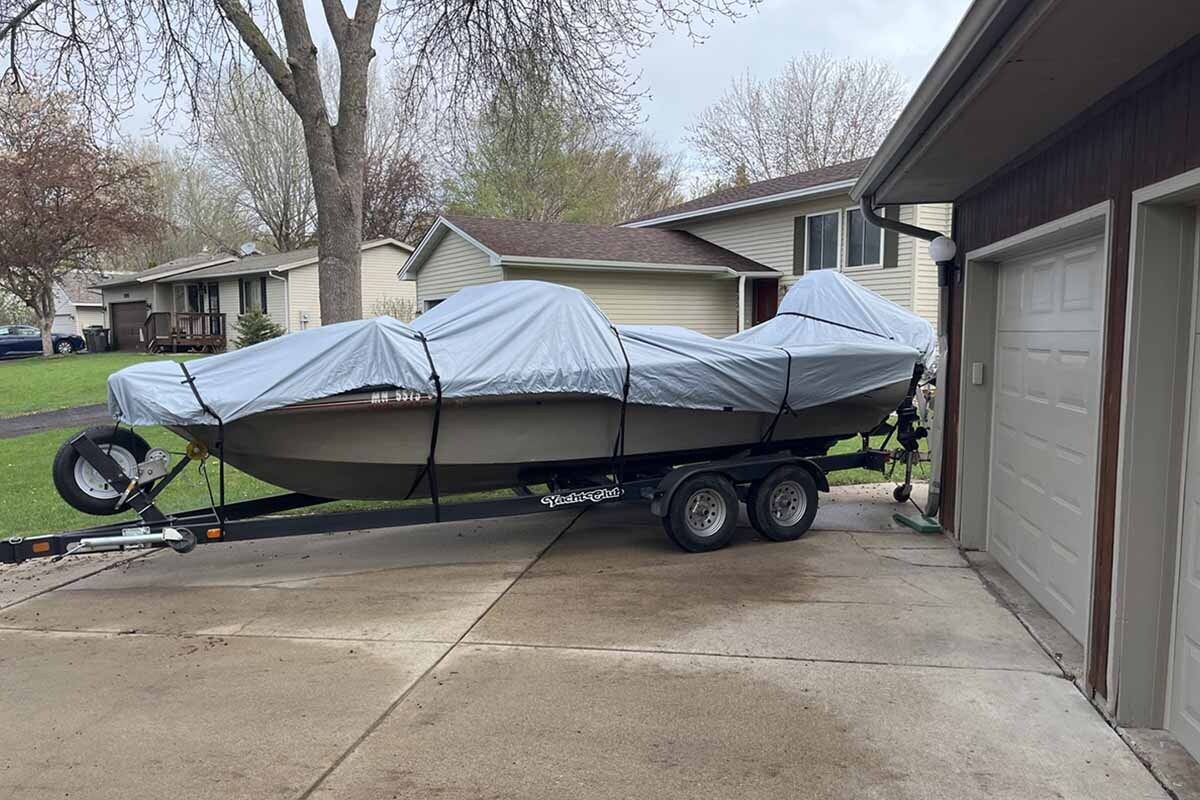
A center console boat cover protects the open deck, helm, seating, and console from sun, rain, dust, and debris. Choose a cover that matches your boat's length, beam, console height, and storage needs. UV-resistant, waterproof marine fabric and proper ventilation help protect the boat while reducing moisture buildup. If your boat has a T-top or a large outboard motor, make sure the cover accommodates those features.
Key Takeaways
- Get the right fit: Match the cover to your boat's length, beam, center console, windshield, and T-top.
- Measure before ordering: Use actual boat measurements rather than relying on the model name.
- Choose durable material: Look for UV-resistant, waterproof marine fabric suited to your storage conditions.
- Allow airflow: Vents and proper support help prevent trapped moisture, mold, and mildew.
- Consider how you store your boat: Outdoor storage, trailering, dockside use, and winter storage require different features.
A center console boat needs a cover that fits its open layout and raised helm. Unlike boats with a more uniform deck, center console boats have a console in the middle, often with a windshield, T-top, seating, and an outboard motor at the stern. These features make it harder to get a good fit with a generic tarp or loosely fitted cover.
The right center console boat cover helps protect your boat from sun exposure, rain, dust, and everyday wear. It also keeps the seating, electronics, and deck cleaner between trips. However, boat length is only one factor when selecting a center console boat cover. The shape of the boat, height of the console, width of the beam, and placement of accessories all play a role in achieving a suitable fit.
Fit, material, and protection are the three main factors to consider when choosing a boat cover. Accurate measurements help prevent gaps and loose fabric. The right marine fabric provides protection against local weather conditions, while good ventilation helps moisture escape. Your boat's storage conditions also influence the type of cover you need. A boat kept outdoors or transported on a trailer needs different cover features from one stored under shelter.
What Is a Center Console Boat Cover?
A center console boat cover is designed to protect a boat with an open deck and a helm positioned near the middle. These boats typically have seating around the console, a windshield, and an outboard motor mounted at the stern. Some boats also have T-tops, rails, rod holders, and other accessories that influence how the cover fits.
A properly fitted center console cover protects the main areas of the boat without leaving large gaps or putting unnecessary tension on the fabric. These areas include:
- Console and electronics: Helps shield the helm, controls, and onboard electronics from rain, dust, and sun exposure.
- Seating and upholstery: Reduces exposure to UV rays, dirt, and moisture that can contribute to fading and wear.
- Open deck and cockpit: Keeps out leaves, pollen, bird droppings, and other debris.
- Windshield and helm area: Provides coverage around raised features without stretching tightly across them.
A standard boat cover may not account for the raised console, windshield, or T-top. As a result, it can flap in the wind, leave exposed areas, or allow rainwater to collect in low spots. A boat cover designed for the boat's dimensions and layout offers a better fit and more dependable protection.
When choosing a cover, consider the boat's full configuration rather than its general type alone. The right design should accommodate the features you want to protect and suit the way the boat is stored.
How to Choose the Right Center Console Boat Cover
Choosing a center console boat cover starts with understanding your boat's dimensions and layout. A cover that fits the hull but ignores the console, windshield, or accessories may leave important areas exposed. Consider the following features before ordering.
Consider Your Boat's Size and Shape
Start with the boat's overall length and beam, which is its width at the widest point. These measurements determine the basic cover size and how far the fabric extends down the sides.
The hull shape matters as well. A cover should follow the boat's profile without pulling too tightly across raised areas or leaving excessive loose fabric. A poor fit can allow wind to get underneath, cause rubbing against the finish, and create pockets where rainwater collects.
Check the manufacturer's sizing chart and compare it with your actual measurements. Boats with similar model names can have different layouts, so measuring the boat is more reliable than guessing.
Account for the Center Console and Windshield
The center console and windshield add height to the boat's profile. A cover needs enough room to fit over these features without excessive stretching or gaps around the edges.
Measure the height from the deck to the top of the windshield and consider the console's shape. The cover should sit securely around the helm while providing enough clearance to avoid putting strain on the fabric or hardware.
Also consider whether the windshield has additional framing or other raised components that affect the fit. These details become especially important when the boat remains covered for extended periods.
Choose a Cover for Your T-Top or Accessories
A T-top changes the coverage needed for a center console boat. Depending on the design, you can choose a cover that fits over and around the T-top or one that fits underneath it and covers the console and cockpit.
An over-the-top design needs enough material and a suitable shape to accommodate the structure. An under-top cover can be a practical option when the goal is to protect the helm and cockpit while leaving the T-top exposed.
Other accessories can affect the fit, too. Rocket launchers, rails, rod holders, and mounted hardware may create pressure points or interfere with the fabric. Check the cover's compatibility with these features before buying a center console boat cover with a T-top.
Decide Between Custom-Fit and Universal Covers
Universal covers generally cost less and fit a range of boats, but they may leave excess fabric or gaps. A true custom cover is made for a specific boat model and usually provides the most precise fit, though it costs more.
A size-matched, semi-custom cover offers a middle ground. It is designed around a set of boat dimensions rather than one exact model, making it a practical choice for owners who want a closer fit without the price of a fully custom option.
Center Console Boat Cover Fit Considerations
Before placing an order, compare your measurements with the available sizing information and check the product details for compatibility.
| Boat feature | Why it matters | What to look for |
|---|---|---|
| Boat length | Determines the overall cover size | Accurate length measurement |
| Beam width | Affects coverage along the sides | A cover designed for your boat's beam |
| Center console | Creates a raised section | Console-compatible fit |
| Windshield | Adds height and changes the profile | Adequate clearance |
| T-top | Changes the required coverage | T-top-compatible design |
| Outboard motor | May extend beyond the hull | Appropriate motor coverage or cut |
Fit is especially important for center console boats, where the cover needs to accommodate the helm and outboard motor. A customer, Alex J, shared this experience on the Seal Skin Covers website:
How to Measure a Center Console Boat for a Cover
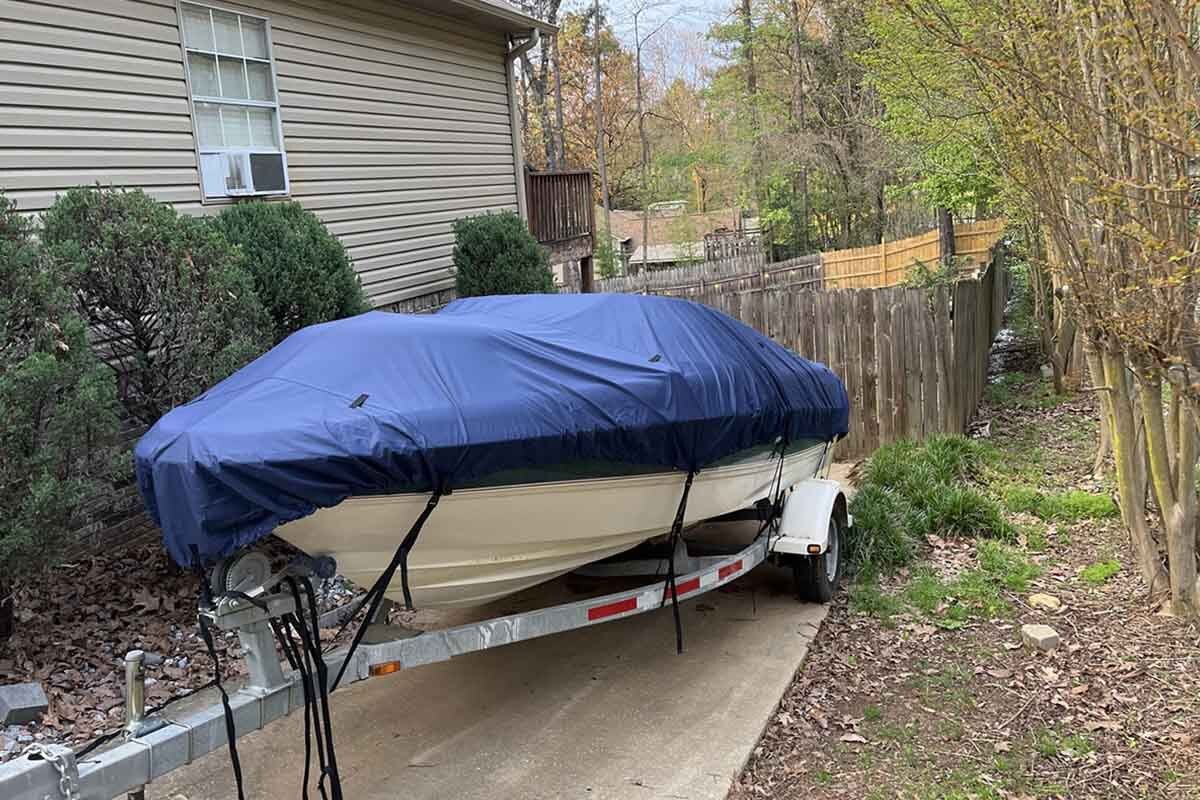
Accurate measurements help you choose a cover that fits securely and protects the areas you want covered. Measure the boat itself, not the trailer, and record each dimension before checking the manufacturer's size chart.
Measure the Boat Length
Measure along the boat's centerline, starting at the tip of the bow and continuing to the stern. Use the boat's actual length rather than the trailer length.
Check the cover's sizing instructions to see whether the listed length includes the outboard motor.
Some covers stop at the transom, while others accommodate the motor. Knowing this before measuring helps prevent ordering a cover that is too short or unnecessarily long.
Measure the Beam
The beam is the boat's widest point. Measure straight across the hull at that point to determine the width the cover needs to accommodate.
This measurement affects how the cover drapes down both sides. If the cover is too narrow, it may pull tightly across the boat and leave the lower sides exposed. If it is too wide, excess fabric can flap in the wind or make securing the cover more difficult.
Account for the Center Console and Windshield
Measure the height from the deck to the top of the windshield. Note the console's overall shape and any other raised features that the cover must accommodate.
These measurements help you determine whether the cover has enough height and clearance to fit over the helm without stretching or leaving gaps. Check the product's measurement instructions to confirm which height dimensions it requires.
Measure With or Without a T-Top
Decide whether the cover should extend over the T-top or fit underneath it.
- For an under-top cover: Measure the area around the console and cockpit that needs protection. The T-top remains exposed.
- For an over-top cover: Account for the full height and shape of the T-top, along with any structures or accessories that affect coverage.
When selecting a center console boat cover with a T-top, confirm that the design is intended for your chosen coverage style.
Consider the Outboard Motor
Decide whether the cover should extend over the outboard motor or stop at the transom. A large motor or twin-outboard setup can change the length and shape required at the stern.
Check how the cover is designed to accommodate the motor and measure according to the manufacturer's instructions.
Best Materials for Center Console Boat Covers
The best material for boat covers depends on your climate, storage conditions, and how often the boat is used. A cover exposed to strong sun and heavy rain needs different qualities from one used mainly for short-term storage under shelter.
Look for a marine-grade fabric that offers the right balance of water resistance, UV protection, breathability, and durability.
Polyester
Marine-grade polyester is a popular value option for boat covers. It is relatively lightweight, durable, and can provide strong water protection when treated or coated appropriately.
Its performance depends on the fabric construction and finish. A treated polyester cover can work well for outdoor storage when it also offers suitable UV resistance and secure construction. Check the product specifications rather than assuming every polyester fabric provides the same level of protection.
Marine-Grade Canvas
A canvas boat cover can offer good durability and resistance to sun exposure and everyday wear. Marine-grade canvas is designed for use in demanding outdoor conditions, although its performance depends on the fiber, weave, and treatment.
Traditional cotton canvas is naturally absorbent and can become heavy when wet. Without suitable treatment and adequate drying, it may also develop mildew. When comparing canvas covers, check the material composition, water protection, and care instructions.
Solution-Dyed Fabrics
Solution-dyed fabrics are made by adding color to the fiber during production rather than applying it only to the finished surface. This helps the color resist fading from prolonged sun exposure.
Solution-dyed acrylic and polyester fabrics can be useful choices for boats stored in sunny climates. However, solution-dyed refers to how the fibers are colored, rather than a specific fabric type. Water resistance, breathability, and durability still depend on the base fiber and the fabric's construction.
Waterproof vs. Water-Resistant Materials
Waterproof and water-resistant fabrics provide different levels of protection. A water-resistant material slows water penetration, while a waterproof fabric is designed to prevent water from passing through under its specified conditions.
For boats stored outdoors or on a trailer, waterproof fabric can help keep rain out. However, waterproofing alone does not prevent moisture from becoming trapped beneath the cover. A well-fitted design with vents or another suitable ventilation system helps balance rain protection with airflow.
Center Console Boat Cover Material Comparison
| Material | Water resistance | UV resistance | Breathability | Durability |
|---|---|---|---|---|
| Marine-grade polyester | High when properly treated | Good, depending on finish | Good, depending on construction | High, depending on quality |
| Marine-grade canvas | Varies by treatment and construction | Generally very good | Generally good | Generally very good |
| Solution-dyed acrylic or polyester | Depends on the base fabric and finish | Generally very good | Depends on the fabric | Generally very good |
Compare the actual product specifications before deciding. Material names alone do not guarantee waterproofing, UV resistance, or breathability.
What Protection Should a Center Console Boat Cover Provide?
Beyond covering the deck, a boat cover should help protect the boat from the elements. It should help protect the boat from the conditions it faces between trips, including sunlight, rain, dust, and moisture. The right combination of fabric, fit, and ventilation makes a difference.
UV and Sun Protection
Boats often receive prolonged sun exposure, especially when stored outdoors or kept at a dock. UV rays can contribute to fading and deterioration of gelcoat, upholstery, and other exposed surfaces.
A UV-resistant boat cover helps reduce direct sun exposure and protect these areas over time. Check the product specifications for UV protection, particularly if your boat spends long periods in an open area with little shade.
Rain and Moisture Protection
A waterproof cover with a secure fit helps keep rain away from the deck, seating, and console. The fabric should shed water rather than allow it to seep through or collect in low spots.
Pooled water adds weight and can stretch the fabric, strain seams, and increase the risk of leakage.
Proper fit, suitable support, and a waterproof material work together to improve protection.
Protection From Dirt and Debris
A cover helps keep dust, pollen, leaves, and bird droppings off the boat. This reduces the amount of cleaning needed before the next trip and helps keep seating and the deck in better condition.
Coverage is especially useful when a boat sits outside for several days or weeks between outings. Make sure the cover fits closely enough to limit gaps without rubbing against the boat's finish.
Mold and Mildew Prevention
Moisture trapped beneath a cover can encourage mold, mildew, and musty odors. Even a waterproof cover can contribute to this problem if damp air has no way to escape.
Good boat cover ventilation allows moist air to move out from beneath the fabric. Vents, suitable support, and letting the boat dry before covering it all help reduce moisture buildup.
Protection During Storage and Trailering
Long-term outdoor storage and highway travel place additional demands on a cover. Heavy duty boat covers should have durable fabric, a secure hem, reliable straps or tie-downs, and reinforced areas that can handle the stresses of use.
For trailering, the cover must be specifically suitable for travel at road speeds. A loose cover can flap, lift, or tear in the wind and may rub against the boat's finish.
Always check the manufacturer's trailering instructions before transporting a covered boat.
Center Console Boat Covers for Different Uses
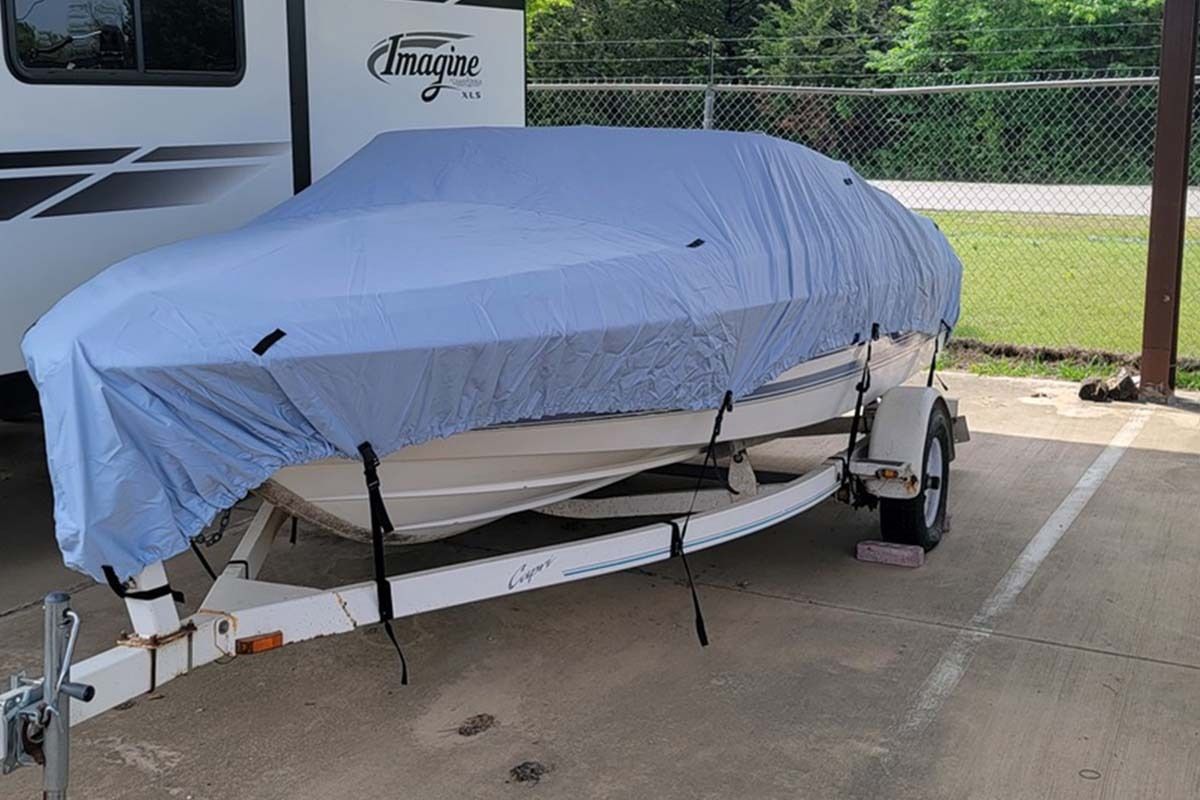
The right cover depends on where the boat stays when it is not in use. A boat stored outdoors faces different conditions from one kept under shelter or transported regularly. Choose a design that matches your storage method.
Covers for Outdoor Storage
For outdoor storage, prioritize UV resistance, rain protection, and durable construction. The cover should fit securely and provide enough coverage to protect the console, seating, and deck from the weather.
Ventilation is important, too. A cover that allows moist air to escape can help reduce the risk of mold and mildew during extended periods outdoors.
Covers for Trailering
Trailering requires a secure fit that can withstand airflow and movement at highway speeds. Look for a heavy duty center console boat cover specifically designed and approved for trailering.
Important features include:
- Secure straps or tie-downs that hold the cover in place.
- Reinforced stress points to help handle wind pressure.
- A snug fit that reduces flapping and rubbing.
- Suitable coverage around the console, windshield, and motor.
Follow the cover manufacturer's instructions for installation and travel. A cover designed only for stationary storage should not be assumed safe for trailering.
Covers for Dock or Mooring
A boat kept at a dock or mooring may face recurring rain, humidity, and moisture from its surroundings. Choose a cover with suitable water protection and ventilation to help keep the cockpit and seating dry.
Check the fit regularly and make sure water does not collect on top. Allowing airflow beneath the fabric is especially important when the boat remains covered for several days at a time.
Covers for Winter Storage
Winter storage calls for durable weather protection and a fabric that can handle extended periods without regular use. Choose a cover suited to the expected weather and make sure it can be secured properly.
A breathable or vented design helps moisture escape, while a suitable support system reduces pooling from rain or other precipitation. Before covering the boat for the season, clean and dry it, and check the cover for wear.
Choosing a Cover Based on Use
| Use case | Important features |
|---|---|
| Outdoor storage | UV protection, rain resistance, all-weather durability |
| Trailering | Secure fit, straps, reinforced stress points |
| Dock storage | Water protection, ventilation |
| Long-term storage | Durable, breathable, weather-resistant fabric |
| Winter storage | Strong weather and moisture protection |
Custom-Fit vs. Universal Center Console Boat Covers
The main difference between custom-fit and universal covers is how closely they match the boat's dimensions and layout. A true custom cover is made for a specific boat model, while a universal cover is designed to fit a range of sizes and shapes.
| Feature | Custom-fit | Universal |
|---|---|---|
| Fit | Precise for the intended model | General fit across different boats |
| Protection | Excellent when correctly designed | Good when properly sized and secured |
| Compatibility | Designed for specific boats | Fits a range of boats |
| Cost | Usually higher | Usually lower |
| Best for | Owners seeking a precise, model-specific fit | Temporary or seasonal use |
Universal covers are often more affordable, but a loose fit can leave gaps, flap in the wind, or allow water to collect. Custom covers offer a closer match but generally come at a higher price.
A size-matched, semi-custom cover offers a middle ground. Seal Skin covers are positioned in this category, providing a near-custom fit at a lower cost than a true model-specific custom cover.
The best choice depends on your boat's measurements, its raised features, and how you plan to use the cover. Focus on fit and protection rather than price alone.
How to Properly Install and Secure a Center Console Boat Cover
Correct installation helps your center console boat cover protect the boat and reduces the risk of damage caused by wind or pooled rainwater. Before covering the boat, make sure the surfaces are reasonably clean and dry.
Follow these steps:
- Start at the bow: Position the cover at the front of the boat and work toward the stern, following the cover's intended orientation.
- Fit the console and windshield: Make sure the fabric sits properly around raised features without excessive stretching or open gaps.
- Prevent water pooling: Use a suitable support pole or the cover's recommended support system to help rainwater run off. Keep vents clear.
- Secure the cover: Tighten the hem, straps, and tie-downs according to the manufacturer's instructions so that the wind cannot easily lift the fabric.
- Check the T-top and motor: Confirm that the cover fits around these features without snagging or putting undue pressure on the fabric.
After installation, inspect the cover from all sides. Check for loose sections, exposed areas, and low spots where water might collect. Recheck the straps periodically, especially after bad weather or before trailering.
Center Console Boat Cover Maintenance Tips
Regular care helps preserve a cover's protective finish and extends its useful life. Salt, dirt, and moisture can build up on marine fabrics, so rinse and clean the cover as recommended by the manufacturer.
Use these maintenance practices:
- Rinse away dirt and salt: Remove accumulated grime and let the fabric dry thoroughly before storing it.
- Follow the care instructions: Use only cleaning methods and products approved for the cover's material to avoid damaging its water-repellent finish.
- Inspect the seams and straps: Look for fraying, loose stitching, worn hems, and damaged tie-downs. Address small issues before they worsen.
- Check ventilation: Keep vents clear so that moist air can escape when the cover is installed.
- Store it dry: When the cover is not in use, fold and store it only after it has dried to help prevent mildew.
If the cover is used for trailering, inspect the fastening points and reinforced areas more frequently. Review the warranty terms to understand what's covered and what care the cover requires.
Common Mistakes When Choosing a Center Console Boat Cover
Choosing a cover based on price or a general boat description can lead to poor coverage. Avoid these common mistakes when comparing options:
- Buying by model name alone: Measure the boat's length and beam rather than assuming every boat in a model range has identical dimensions.
- Ignoring raised features: The center console, windshield, T-top, and motor all influence the cover's fit and the clearance it needs.
- Choosing the wrong level of water protection: A water-resistant fabric may be insufficient for a boat exposed to frequent rain or stored outdoors for long periods.
- Overlooking ventilation: Trapped moisture can encourage mold, mildew, and musty odors, even when the cover keeps rain out.
- Using a loose universal cover: Excess fabric can flap in the wind, rub against the gelcoat, and leave gaps that expose the boat.
- Using a storage cover for trailering: A cover must be designed for road travel to handle highway wind and movement safely.
A little preparation before buying can prevent these problems. Take accurate measurements, check the fabric specifications, and match the cover to your storage conditions.
Choosing the Right Center Console Boat Cover
The best center console boat cover is one that fits your boat's dimensions and features, uses durable marine fabric, and provides protection suited to your storage conditions. Measure the hull, console, windshield, and any T-top or outboard motor before ordering. Then compare UV protection, water resistance, ventilation, and fastening features.
Think about how the boat will be stored between trips. Outdoor storage calls for dependable weather protection, while trailering requires a secure cover designed for road travel. Proper installation and routine maintenance also help keep the cover working as intended.
Find a cover that fits your center console boat and protects it throughout the season. Seal Skin Covers offers boat covers designed to provide a secure fit and reliable protection from the elements.
You can call us at 800-915-0038 during our office hours (Monday to Sunday, 9 AM to Midnight EST) and we will help you find the right boat cover that fits your needs and budget. We will also help you if you have any questions about our products, shipping policies, and exchange/refund policies.
Frequently Asked Questions
What size cover do I need for a center console boat?
How do I measure a center console boat for a cover?
Do center console boats need custom covers?
What is the best material for a center console boat cover?
The best material for boat covers depends on the climate and storage conditions. Treated marine-grade polyester can offer a durable, cost-effective option, while solution-dyed acrylic fabrics can provide strong color retention in sunny conditions.
Compare the fabric's water resistance, UV protection, breathability, and care requirements before buying.
Can you trailer a center console boat with a cover on?
Should a center console boat cover be waterproof?
A waterproof cover is a good choice for outdoor storage and other situations where the boat faces regular rain. Water-resistant fabric slows water penetration but may not keep the boat dry during prolonged exposure.
Choose a waterproof design with suitable ventilation to help prevent moisture from becoming trapped underneath.
How do you cover a center console boat with a T-top?
How do I prevent mold under a boat cover?
Preventing mold under a boat cover starts with controlling moisture and allowing air to circulate. A few simple steps can help:
- Choose a breathable cover: Look for materials that allow moisture to escape.
- Let the boat dry: Remove standing water and let wet surfaces dry before covering.
- Use a support pole: Create a slope that helps rainwater drain instead of pooling.
- Keep vents clear: Allow air to circulate beneath the cover.
Regularly check for trapped moisture to help reduce the risk of mold, mildew, and musty odors.